
Review · ITALY
Paestum: 2-Hour Greek Temples & Archaeological Museum
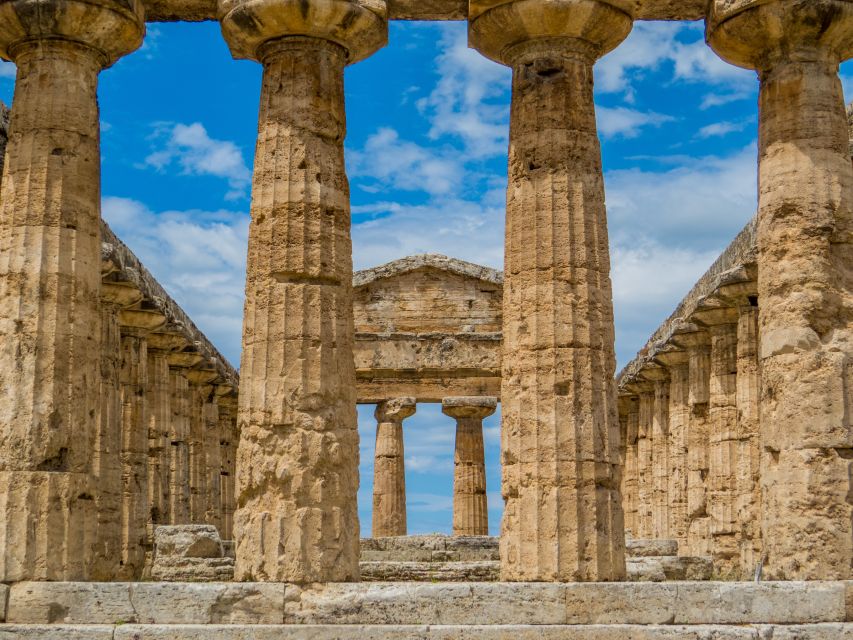
Ancient temples rarely look this complete. This private Paestum tour gives you a guided walk through the archaeological park, including three Greek temples, Roman civic ruins, and the National Archaeological Museum. I especially like the certified archaeologist guide and the included skip-the-line tickets, which make a short visit more useful. I also like that the group is private, so you can ask questions without competing with a crowd.
The main consideration is the price: $189.75 per person is a serious outlay for a two-hour activity. You also need to reach Paestum on your own, and the tour is not suitable for wheelchair users or people with mobility impairments. One timing detail deserves attention before booking: the advertised duration is two hours, while the detailed schedule lists two hours at the park plus 30 minutes at the museum.
Key points to know before booking
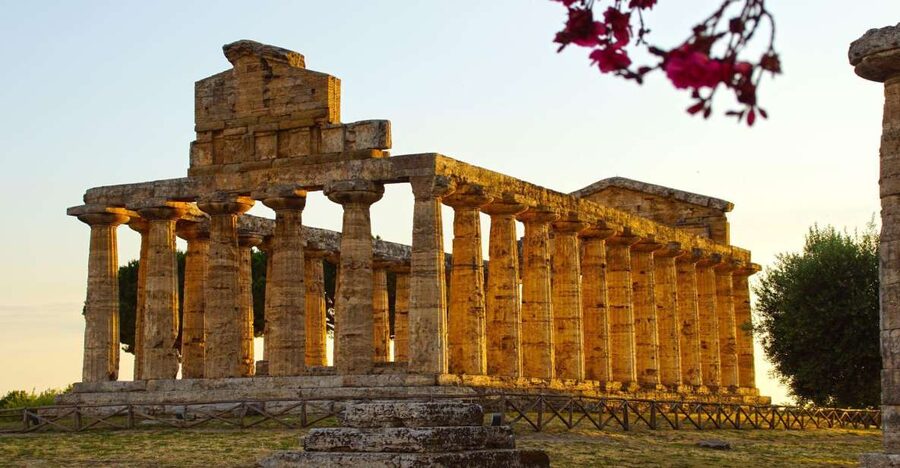
- Three remarkably preserved Greek temples: See the Temple of Neptune, the Temple of Ceres, and the Basilica, all dating from the sixth century B.C.
- A private archaeologist-led visit: Your guide provides assistance throughout the tour in English, Italian, Spanish, French, or German.
- Roman Paestum is part of the story: The route includes the amphitheater, forum, markets, city walls, and comitium.
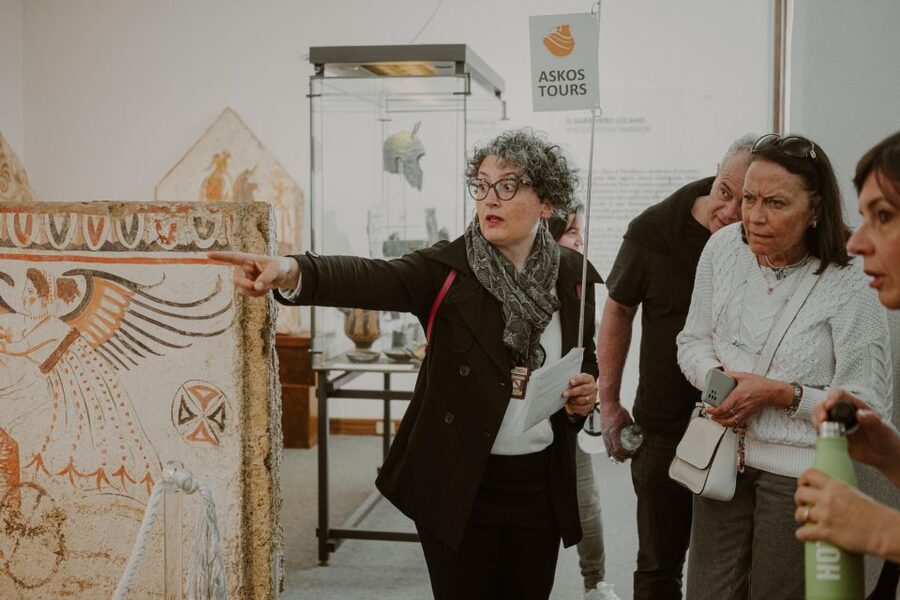
- The Tomb of the Diver is the museum prize: The National Archaeological Museum holds local Greek art from the seventh century B.C.
- Tickets are included: Skip-the-line entry removes one task from a short visit.
- You must arrange your own transport: Hotel pickup, drop-off, food, and drinks are not included.
Why Paestum is worth the trip
Paestum began as Poseidonia, a Greek colony that became an important city of Magna Graecia. The site lies in Campania, in the northern part of the Cilento region, near the Sele River and the Tyrrhenian coast.
That setting matters because Paestum gives you two ancient cities in one visit. The Greek foundations and temples are the visual draw, but Roman Paestum appears in the roads, political buildings, amphitheater, and market areas. A guide can help you see that the site is not simply a row of isolated temples.
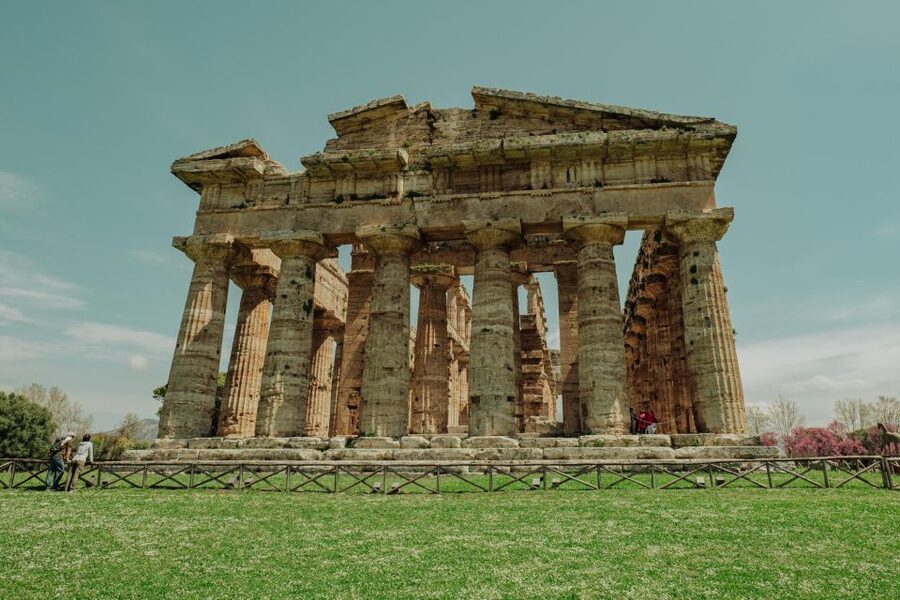
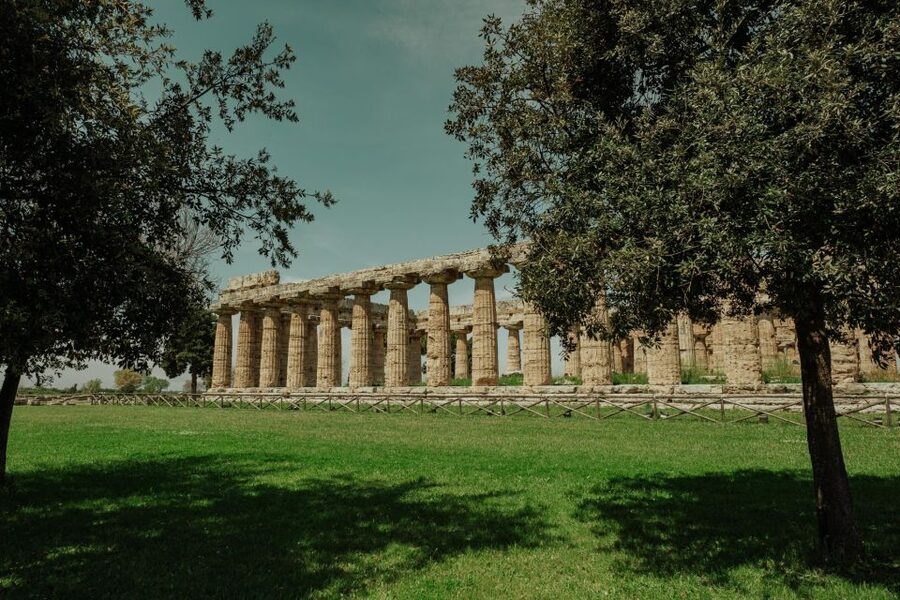
The temples are the reason many people make the trip. They are Doric buildings from the sixth century B.C., and their columns remain unusually complete. The Temple of Neptune is especially important to the visit, since it is also the meeting point for the tour.
I like Paestum for another reason: the ruins are easier to understand as a city. You are not only looking at one famous building. You are seeing religious, political, commercial, and public spaces together, with the Greek and Roman periods occupying the same archaeological park.
More Valley of the Temples Tours in Italy:
- Agrigento: Valley of the Temples Skip-the-Line Sunset Tour
★ 4.5 · 1,512 reviews - Palermo: Agrigento and the Valley of the Temples Day Tour
★ 4.2 · 1,240 reviews - Agrigento: Valley of the Temples Ticket & App Audioguide
★ 4.3 · 1,160 reviews
Meeting your guide at the Temple of Neptune
The guide meets you at the entrance to the Temple of Neptune, holding a sign with your name. This is a clear arrangement, but you need to arrive at the correct place rather than expect a hotel pickup.
The meeting point also puts you beside one of the most important monuments from the start. If you arrive early, you can get your bearings at the entrance before the walking tour begins. Since the guide is assigned to a private group, you should have a better chance to ask about details that interest you, from temple design to the later Roman buildings.
The experience includes guidance and assistance for the full duration. Languages offered are English, Italian, Spanish, French, and German. If you are booking for a mixed-language group, check that the selected language works for everyone in your party.
The three Greek temples and the power of Doric design
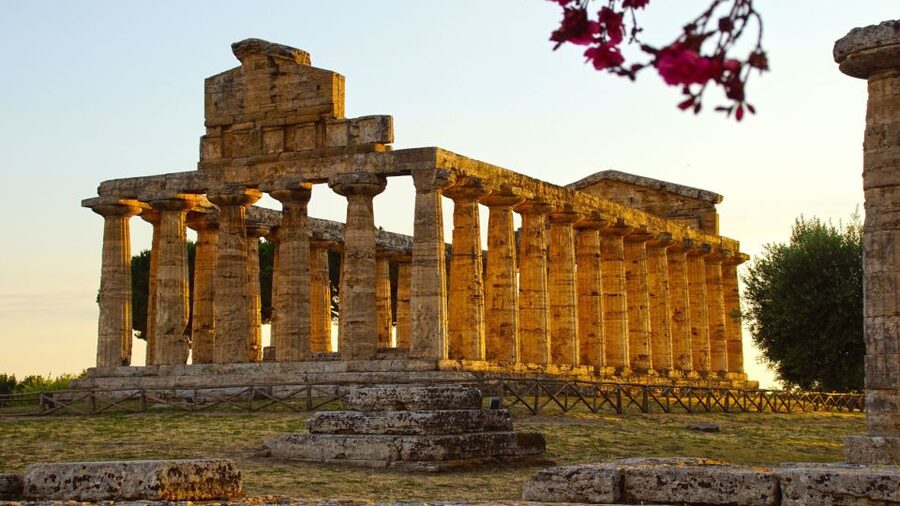
The first major part of the tour takes place in the Archaeological Park of Paestum. The route includes the Temple of Neptune, the Temple of Ceres, and the Basilica.
These temples date to the sixth century B.C. Their survival is the main reason Paestum is often treated as one of the best-preserved Graeco-Roman cities. The columns are tall, orderly, and visually strong. The Basilica and Temple of Ceres are often compared with the Parthenon in Athens, though each building has its own design and place in the city.
The Temple of Neptune is a natural anchor for the visit. It is also the arrival and departure point, so you do not need to find a second meeting location inside the park. The Temple of Ceres and the Basilica add useful contrast, letting you compare different Doric structures rather than treating the site as one monument.
A guide is valuable here because temple ruins can look simple at first glance. Columns and foundations do not explain themselves. Your archaeologist guide can connect the remains to Greek religious architecture and point out how the buildings fit into the wider city.
The tour is still a walking visit, not a bus tour between monuments. That makes comfortable shoes a sensible choice. The activity is specifically not suitable for people with mobility impairments or wheelchair users, so consider that limitation carefully before paying.
Roman Paestum: Forum, amphitheater, and markets
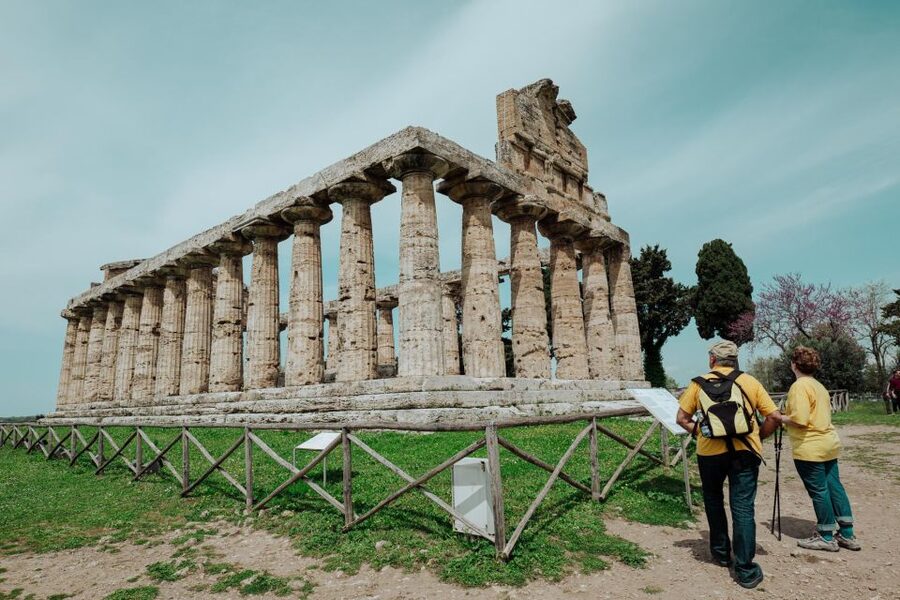
Greek Paestum gets most of the attention, but the Roman remains give the site a second layer. The route includes the city walls, the comitium, the amphitheater, the forum, and markets.
The comitium was a political assembly hall. The forum was a public center, while the amphitheater points to the Roman use of the city for public entertainment. The markets add another everyday element. Together, these places help you picture Paestum as a functioning town rather than a collection of sacred buildings.
This part of the tour is especially useful if you already know the temples will be your main focus. The Roman ruins explain how the city changed after the Greek period. You get a more complete view of Paestum’s urban life, with religion, politics, commerce, and public gatherings all represented.
The guide’s role matters here because many Roman remains are less immediately striking than the temples. A short explanation can turn a low wall or open foundation into part of a civic plan. Without that context, you might walk past the forum or comitium without understanding why it mattered.
More Museum Visits in Italy:
- Paestum: Private Tour of Greek Temples and Archaeological Museum
★ 5.0 · 60 reviews - Paestum: Temples and Museum Tour with Archaeologist Guide
★ 5.0 · 14 reviews - Montserrat Museum and Monastery Entry Ticket
★ 4.5 · 1,740 reviews - Lisbon: Belem, Jeronimos Monastery, and Coach Museum Tour
★ 4.8 · 478 reviews
The National Archaeological Museum and the Tomb of the Diver
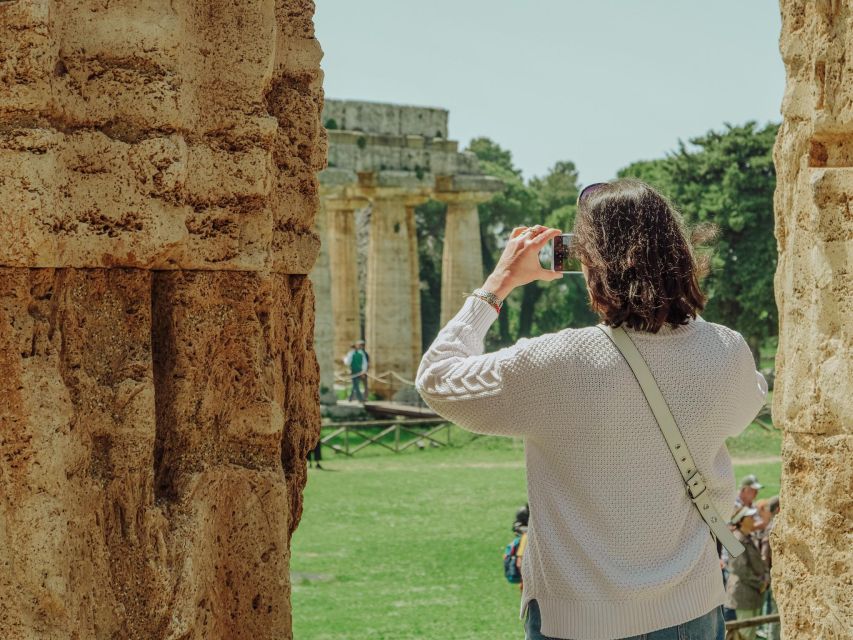
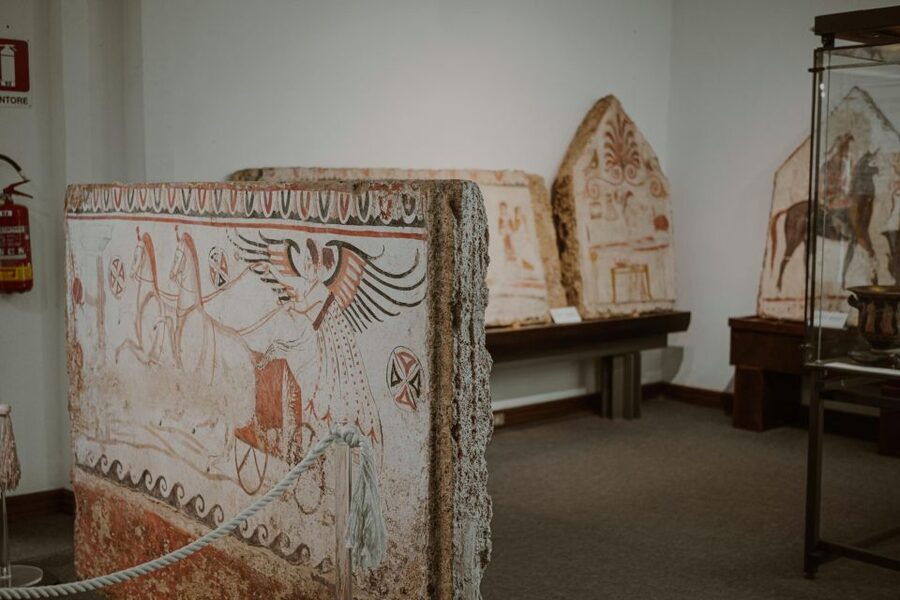
After the archaeological park, the tour continues to the National Archaeological Museum of Paestum. The museum displays local Greek artworks dating from the seventh century B.C. and includes material from Magna Graecia.
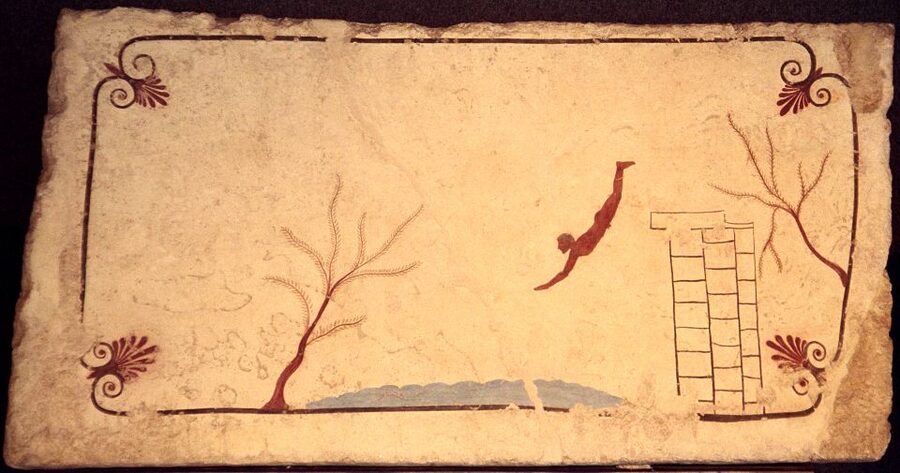
The major highlight is the Tomb of the Diver. This painted tomb is described as the museum’s undisputed prize, and it gives the visit a powerful indoor finish. The temples show monumental architecture in stone. The tomb adds a more personal and artistic side to the ancient world.
The museum visit is listed as a 30-minute guided stop. That is enough time to focus on the major pieces, especially if your guide keeps the visit organized. It is not a long museum session, so you should not expect to examine every object at length.
The schedule creates one practical question. The activity is sold as lasting two hours, but the detailed itinerary lists a two-hour guided visit in the park and a separate 30-minute museum tour. Because those figures do not fit neatly together, confirm the exact timing when you check available departures. This is particularly important if you have a train, transfer, meal reservation, or another timed activity afterward.
How the private format affects the visit
This is a private group experience, not a large shared tour. That is one of its strongest features. You can ask the guide to clarify a temple feature, Roman building, or museum object without waiting for a general question period.
A private format can also make a short tour feel less rushed, though the overall schedule remains limited. You are not buying an open-ended archaeological lesson. You are buying focused guidance through the park and museum, with the main highlights selected for you.
The guide is described as a certified archaeologist. That should appeal to you if you want more than basic directions and dates. Paestum rewards explanation because the site combines Greek and Roman remains, and the museum connects the ruins to art and burial customs.
The published rating is 4.8 from 19 reviews, which suggests strong overall satisfaction. The number of ratings is still modest, so I would treat it as a useful signal rather than a guarantee that the tour will suit every visitor.
Is $189.75 per person good value?
At $189.75 per person, this is not a budget way to see Paestum. The value comes from the private guide, professional archaeological background, included admission, and skip-the-line access.
If you are already making the trip to Paestum and want clear interpretation in a short window, the cost may make sense. A private guide can help you understand the three temples, Roman civic buildings, and museum highlights without spending hours researching the site yourself.
The value is weaker if you prefer to explore alone or plan to spend much longer at the museum. The tour does not include transport, food, or drinks, and the listed duration is short. You will need to arrange your own route to the meeting point at the Temple of Neptune.
The cost also depends on group size. Since this is a private group, the per-person price may feel more reasonable when shared among several people, but the published price is still charged per person. Compare the cost with your group’s interest in archaeology, not only with the length of the tour.
Who will get the most from this tour?
I would choose this experience if you want a structured introduction to Paestum and value expert explanation. It suits first-time visitors who want the three temples, Roman ruins, and museum in one planned visit.
It is also a good fit for people who do not want to study the site in advance. Paestum has enough remains to make independent interpretation difficult, especially when you move from Greek temples to Roman public buildings and then to painted tomb art.
The tour is less suitable for you if you have limited mobility, use a wheelchair, or need a slower route. The activity is explicitly not suitable for wheelchair users or people with mobility impairments.
I would also hesitate if your schedule is fixed to the minute. The timing needs clarification because the overall two-hour duration conflicts with the separate park and museum allocations. Ask about the exact start and finish time before booking if a connection depends on it.
Practical details that matter
The activity has several helpful booking conditions. You can cancel up to 24 hours in advance for a full refund, and you can reserve now while paying later. Starting times depend on availability, so check the calendar before building the rest of your day around the visit.
Skip-the-line tickets are included. That does not remove the need to reach the correct entrance, but it does mean you do not have to buy the archaeological park and museum tickets separately as part of the tour.
Hotel pickup and drop-off are not included. Food and drinks are also not included, so plan those independently. The tour ends back at the Temple of Neptune meeting point, which makes the return arrangement simple but leaves onward transportation up to you.
Askos Tours operates the experience. The guide meets you with a sign carrying your name, a useful detail if several tours are gathering near the temple entrance.
Should you book Paestum’s private temple tour?
Book it if you want a focused, archaeologist-led introduction to Paestum and prefer a private group. The combination of three Greek temples, Roman public buildings, the National Archaeological Museum, and the Tomb of the Diver gives you a strong overview of the site’s main attractions.
The price is high, and the short schedule means this is not the right choice for every visitor. Before booking, confirm the exact duration, make sure you can manage the walking, and plan your own transport to the Temple of Neptune.
For an archaeology-minded visitor with limited time, this is a well-targeted way to see Paestum. For a slow explorer on a tight budget, independent admission may offer better value.
FAQ
Where does the tour begin?
The guide meets you at the entrance to the Temple of Neptune, holding a sign with your name.
Where does the tour end?
The activity ends back at the Temple of Neptune meeting point.
How long does the experience last?
The activity is advertised as two hours. The detailed schedule lists a two-hour guided park visit and a 30-minute guided museum visit, so confirm the exact timing when checking availability.
What languages are available?
The live tour guide can provide the experience in English, Italian, Spanish, French, or German.
Is this a private tour?
Yes. The activity is offered for a private group.
Are entrance tickets included?
Yes. Skip-the-line tickets and all taxes are included.
Does the tour include hotel pickup?
No. Hotel pickup and drop-off are not included.
Is the tour suitable for wheelchair users?
No. The activity is not suitable for wheelchair users or people with mobility impairments.
More 2-Hour Experiences in Italy
- Private 2 Hour Guided Tour to Philae Temple from Aswan
★ 5.0 · 45 reviews - 2 Hours Tour in Philae Temple
★ 4.0 · 38 reviews - Ninh Binh Jeep tour:2 hours visit Bich Dong, Thai Vi temple
★ 3.8 · 38 reviews - Bangkok: 2 Hours Grand Palace & Wat Pho Private Tour
★ 4.9 · 15 reviews
Just added around Italy
- Private Tour to the Villa Romana del Casale and the Valley of the Temples★ 4.5 · 19 reviews
- Agrigento and Piazza Armerina: Valley of the Temples and Villa Romana del Casale★ 4.5 · 121 reviews
- Villa Romana Del Casale in Piazza Armerina and Valley Of Temples in Agrigento★ 4.5 · 38 reviews
- Padre Pio’s Shrine in San Giovanni Rotondo from Bari (Apulia)★ 5.0 · 3 reviews
- Cooking Class in a former Artist Monastery in the Heart of Monopoli★ 5.0 · 18 reviews
- Agrigento to Siracusa with Valley of Temples and Roman Villa Trip★ 5.0 · 5 reviews
- Private transportation to the Valley of the Temples + Agrigento★ 5.0 · 8 reviews
- Agrigento Valley of the Temples Archaeological Area★ 4.0 · 33 reviews
Valley of the Temples Tours, compared.
Valley of the Temples Skip-the-Line Sunset Tour
Read our review →
Agrigento and the Valley of the Temples Day Tour
Read our review →
Valley of the Temples Ticket & App Audioguide
Read our review →
Valley of the Temples and Scala dei Turchi Day Trip
Read our review →
Catania: Valley of the Temples and Turkish Steps with Snack
Read our review →
Valley of the Temples Entry Ticket & Audio Guide
Read our review →Browse the lists this tour appears in