
Review · ITALY
Paestum Tour: Best Preserved Temples in the World (UNESCO)
Ancient Greece survives remarkably well here. Paestum gives you three grand temples, a Roman forum, an amphitheater, and the famous Tomb of the Diver in one compact archaeological visit. I especially like the private guide, which lets you ask questions as the ruins unfold, and the chance to pair the outdoor park with the National Archaeological Museum rather than seeing only the postcard views.
The main concern is value. The price is $325.13 per group of up to 25, but entrance tickets are extra, and a two-hour visit can feel brief if you want time for careful museum viewing. Still, the guide adds useful context, and the experience received a 4.5 rating from 11 reviews, with strong praise for clear explanations of the architecture and history.
Key points to know before you book
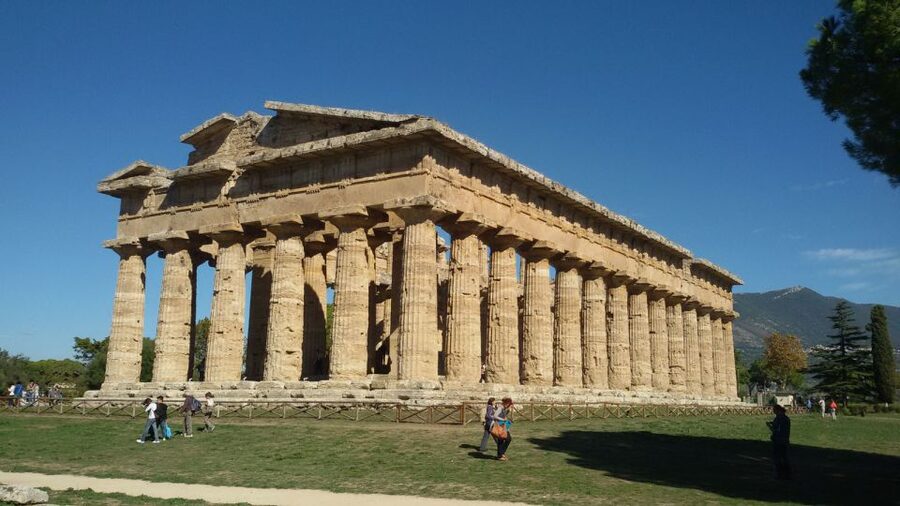
- Three unusually well-preserved Greek temples: See the sanctuaries of Hera, Poseidon, and Ceres, also linked with Athena.
- A guide who explains the stones: The guide is praised for answering questions clearly and creating cordial, enriching exchanges.
- Museum time is part of the plan: The visit includes the famous Tomb of the Diver and important finds from Paestum.
- Private format for up to 25 people: You get your own group and a live guide in English, Spanish, French, German, or Italian.
- Tickets and transport cost extra: You meet at the archaeological museum entrance in Paestum and make your own way there.
- Two hours keeps the visit focused: It works well for a first look, but you will need to keep moving.
Why Paestum feels different from Rome
Paestum began as Poseidonia, a Greek city in Magna Graecia, the Greek-settled part of southern Italy. The Romans later called it Paestum, honoring Poseidon, although the city also showed strong devotion to Hera and Athena.
That mixture gives the site its character. You are not walking through a single Roman monument with a familiar imperial story. You are seeing Greek sanctuaries later used and reshaped under Roman rule, with the old temples still dominating the setting.
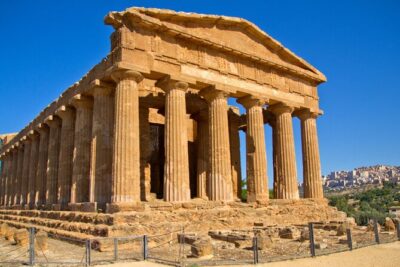
The real surprise is the condition of the temples. Their columns and overall forms are easy to read, even if you do not know much about Greek architecture. A guide helps turn rows of stone into an understandable plan: sanctuary, sacred building, public space, roadway, and later Roman additions.
I like this kind of archaeological visit because the scale is human. You can grasp the size of the buildings without needing a long imagination exercise. The temples are large enough to impress, yet close enough for you to study their columns and proportions.
More Valley of the Temples Tours in Italy:
- Agrigento: Valley of the Temples Skip-the-Line Sunset Tour
★ 4.5 · 1,512 reviews - Palermo: Agrigento and the Valley of the Temples Day Tour
★ 4.2 · 1,240 reviews - Agrigento: Valley of the Temples Ticket & App Audioguide
★ 4.3 · 1,160 reviews
The Basilica of Hera gives you the oldest view
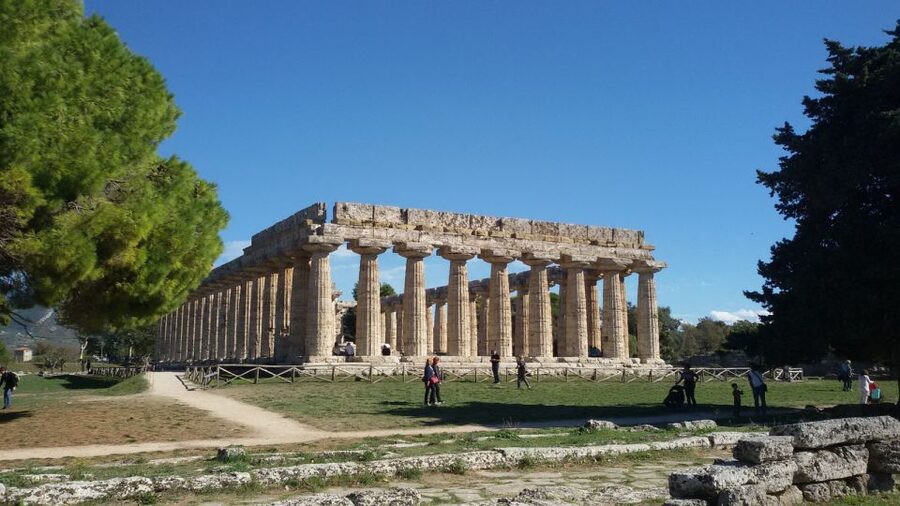
The first temple is dedicated to Hera and is also called the Basilica. It is the oldest of the three main temples and was built in the Doric style.
Its size is impressive: about 26 meters wide and 55 meters long. That length matters because it helps you understand that this was not a small shrine tucked beside a larger monument. It was a major religious building with a strong visual presence.
The name Basilica can confuse modern visitors. Today, you may associate a basilica with a Christian church, but here the name is a later description rather than the original Greek title. Your guide can help separate the ancient purpose of the building from the labels applied over time.
This is a good place to pay attention to the columns. Doric architecture is often described as plain compared with later styles, but at Paestum the simplicity has force. The heavy columns and compact form create a sturdy, grounded appearance.
The drawback is that the Basilica is not a complete building with a roof and interior rooms waiting to be explored. You are reading the remains. That is where the guide earns the fee, especially if you want to understand how the visible pieces fit together.
The Temple of Poseidon is Paestum’s great centerpiece
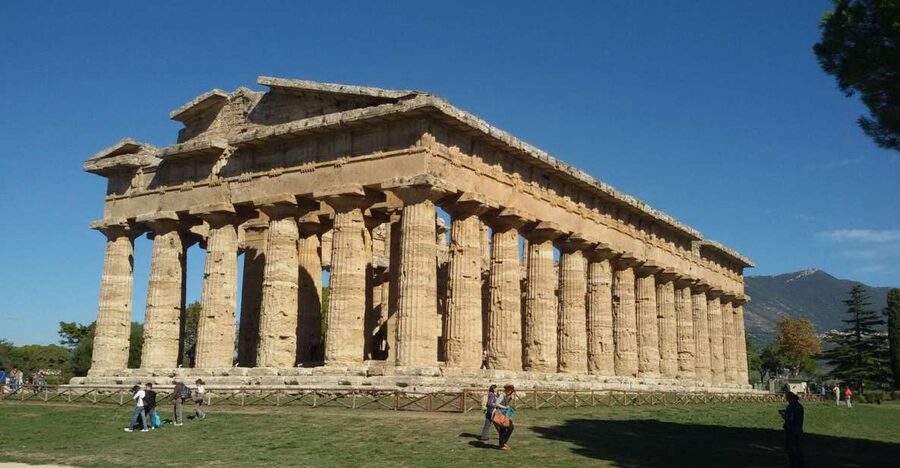
The largest temple is dedicated to Poseidon and is also called the Temple of Neptune. It was built around 460 BCE in the Doric style and is often compared with the Temple of Zeus at Olympia.
This is the moment when the scale of Paestum becomes clearest. The temple has enough surviving structure to give you a strong sense of the original design, rather than just a few scattered columns. The proportions are powerful, and the repeating stone forms make the building feel remarkably complete.
The name Poseidon explains the city’s original Greek identity, though Paestum’s religious life was not limited to one god. The tour places this temple beside the other sanctuaries so you can compare their size, design, and role.
I would give this stop your full attention. Look beyond the famous front view and notice how the columns, steps, and upper structure work together. You do not need specialized architectural training to appreciate it, but you will get more from the visit if you ask the guide why the buildings look different from one another.
The practical limit is time. With only two hours for both the park and the museum, you may not be able to linger as long as you would like at this temple. If this is your main reason for coming to Paestum, tell the guide early so you can manage the pace together.
The Temple of Ceres introduces Athena’s sanctuary
The third temple is called the Temple of Ceres, though it is associated with a sanctuary dedicated to Athena. It is more modest in size than the Temple of Poseidon, but it remains an important part of the site.
This contrast is useful. If you saw only the largest temple, you might leave with the idea that Paestum is simply a collection of giant Greek columns. The smaller sanctuary shows another side of the city, with a different scale and religious focus.
The name Ceres also points to the Roman layer of Paestum. The Romans adapted the old Greek city and its sacred places, giving some monuments new names and associations. Your guide can help you keep these periods separate instead of treating every ruin as belonging to one moment.
For me, this is one of the places where the guided format matters most. A short label cannot always explain why a temple carries one name while its earlier connection belongs to another deity. A live guide can answer that question immediately, and one previous guest specifically praised the guide’s willingness to answer questions clearly.
A few more temple visits around Italy worth a look
- Pantheon Elite Guided Tour – Rome’s Iconic Ancient Temple
★ 5.0 · 1,447 reviews - Rome’s Iconic Temple: Pantheon Audio Guided Tour with Fast Access
★ 4.0 · 1,188 reviews - Colosseum Special Access Tour, with Ancient Temples & Tombs
★ 4.8 · 747 reviews - Agrigento: Valley of the Temples E-Scooter Tour
★ 4.6 · 557 reviews
The Via Sacra connects temples with Roman Paestum
The tour continues along the Via Sacra, the Sacred Way. This route gives you a sense of how the archaeological park was organized, linking religious buildings with public and civic spaces.
Along the way, you see the Roman Forum. This is an important shift in the visit. The Greek temples attract the eye, but the forum reminds you that Paestum continued as a Roman city with its own civic center.
You also visit the amphitheater. It is not presented as a separate show or performance, but as part of the remains you encounter while moving through the park. Together, the forum and amphitheater make the site feel like a functioning city rather than a group of isolated sanctuaries.
Do not expect modern facilities or a reconstructed ancient town. The attraction is the surviving layout and the chance to connect religious, civic, and entertainment spaces. I find that this makes the site easier to picture, particularly when the guide explains how the Roman additions relate to the older Greek foundations.
The museum completes the story indoors
After the outdoor ruins, the tour ends at the National Archaeological Museum. The meeting point is at the museum entrance, and the activity returns there at the end.
This arrangement is practical because the museum is not an optional extra hidden in another part of the area. It completes the story begun among the temples. Outside, you see monumental architecture. Inside, you see objects and decoration that provide more detail about the people and beliefs connected with Paestum.
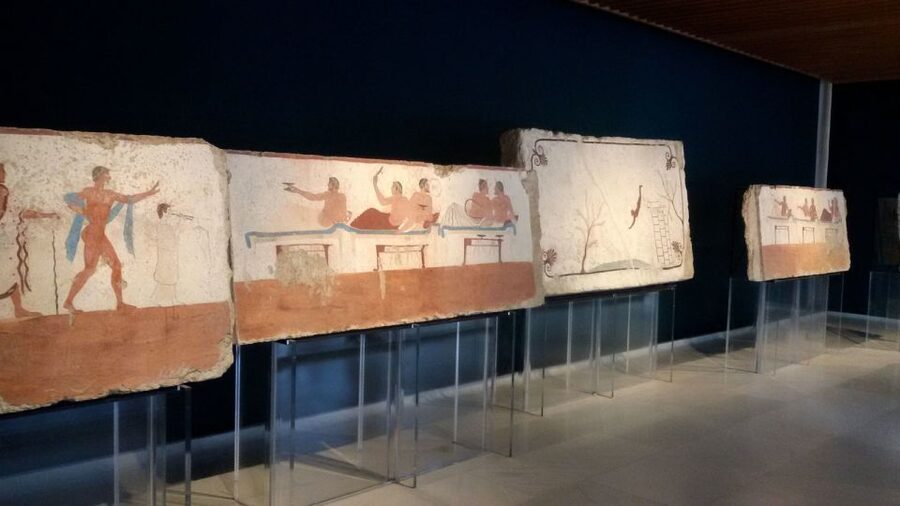
One major highlight is the collection of 33 metopes from the Temple of Hera Argiva. These carved panels help you look beyond columns and foundations, offering evidence of the artistic work that decorated the sanctuaries.
You also see a statue of Zeus and a crater showing the Rape of Europa. These pieces add mythological and artistic context to the buildings, making the museum more than a short final stop.
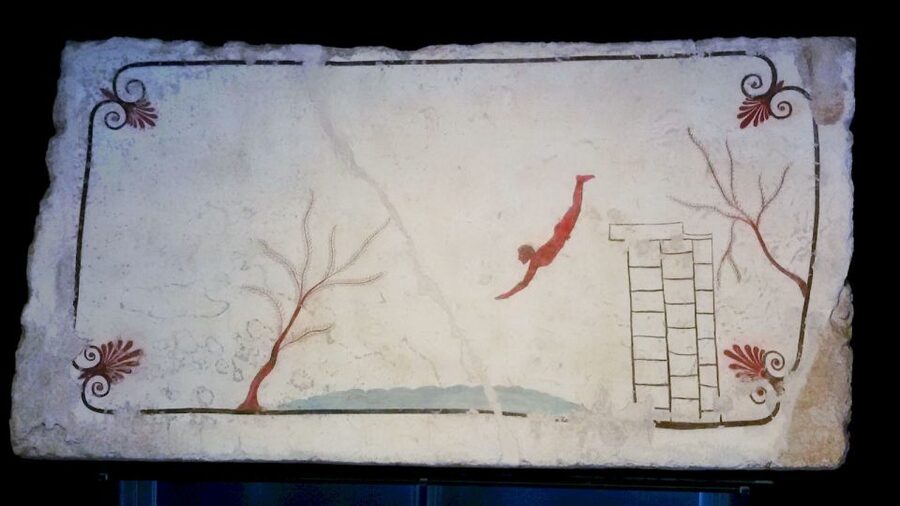
The most famous object is the Tomb of the Diver. It is made from five limestone slabs of local travertine, plastered and decorated with figurative wall painting using the fresco technique.
The tomb’s importance comes from its unusual painted subject and its relationship to burial. It gives you a more personal connection to the ancient world than a massive temple can provide. After seeing monumental public architecture, you finish with a small, intimate work of funerary art.
Because the tour lasts two hours, ask yourself how much museum time you want. If you like objects, paintings, and small details, the outdoor portion may need to move at a brisk pace. If you mainly want the temples, the schedule may feel better balanced.
What the private guide adds
The private format is available for groups of up to 25 people. That is a generous maximum, so the actual feel depends on how many people are in your booking. A small private group should make questions and pacing easier, while a larger group may feel less personal despite having its own guide.
The guide is licensed and live, with tours offered in English, Spanish, French, German, and Italian. The strongest praise focuses on explanations of architecture and history, along with the guide’s ability to answer questions well.
That detail matters more at Paestum than it might at a simple photo stop. The names of the temples can be confusing, especially with Greek and Roman labels overlapping. The building dates, religious identities, and later uses also benefit from explanation.
A guide cannot change the two-hour length or replace your own time with the museum exhibits. What the guide can do is help you spend those two hours wisely, pointing out the details that are easiest to miss and keeping the route coherent.
Is $325.13 a fair price?
The listed cost is $325.13 per group of up to 25. That can be reasonable for a larger private group because the price is shared, but it is a much bigger commitment for one or two people.
Entrance tickets to the Archaeological Park and National Archaeological Museum are not included. Lunch, dinner, tastings, transportation, and pickup or drop-off are also separate, so you should calculate the full outing rather than treating $325.13 as the final cost.
The value rests almost entirely on the guide. If you want a structured explanation of the temples, Roman spaces, and museum pieces, the private format may justify the fee. If you prefer to walk independently and read at your own pace, the added cost may be harder to defend.
The group maximum is also worth considering. A family or organized group of several people may get better value than a couple booking alone. Since tickets are separate, compare the combined guide and admission costs with your budget before reserving.
Timing, meeting point, and practical planning
The experience lasts two hours, with starting times available according to the date you choose. You meet at the entrance of the Archaeological Museum in Paestum, and the activity ends back at that meeting point.
Transportation is not provided. You need to arrange your own way to Paestum, and there is no pickup or drop-off included. This makes the tour best suited to someone already planning to reach the archaeological area independently.
The museum entrance is the stated starting point even though the route includes the archaeological park first. Confirm the exact meeting instructions and start time when booking so you are in the right place before the guide arrives.
You can cancel up to 24 hours in advance for a full refund, and the reserve-now, pay-later option gives you some flexibility while plans are still changing. These terms are useful, but they do not solve the main planning issue: you still need to arrange admission and transportation separately.
Who will get the most from this Paestum visit?
I would recommend this tour to you if Greek temples are a priority and you want help reading the site rather than simply photographing it. It also suits first-time visitors who want the outdoor ruins and museum collection tied together in one short visit.
The tour is a good fit for families or private groups that value conversation. The positive feedback specifically highlights clear explanations, strong answers to questions, and cordial exchanges, so the experience appears especially useful for people who enjoy asking about architecture and ancient beliefs.
You may want a different plan if you need a slow, unhurried museum visit. Two hours is efficient, but it leaves limited room for lingering at every temple and studying all the exhibits in detail.
It may also be less attractive if you are a solo visitor or a couple focused strictly on keeping costs low. The group price can work well when divided among several people, but the separate entrance fees and transport costs make the total worth checking carefully.
Should you book the Paestum tour?
Book it if you want the three temples, Roman forum, amphitheater, and museum highlights explained by a live guide in a compact two-hour route. The strongest reason to choose it is the quality of the conversation: clear architectural and historical explanations, plus time to ask questions.
Think twice if your goal is a long, independent study of the site or if you are traveling on a tight budget. The price is per group, tickets are extra, and the schedule is short.
For a group sharing the fee, this is a practical way to make sense of Paestum’s Greek and Roman layers. For a small party, compare the total cost with a self-guided visit before you commit. The temples are the main prize, but the Tomb of the Diver and the museum artifacts are what give the visit its human scale.
FAQ
Where does the Paestum tour begin?
The tour begins at the entrance of the Archaeological Museum in Paestum.
Where does the activity end?
The activity ends back at the meeting point, at the archaeological museum entrance.
How long does the tour last?
The tour lasts two hours. Available starting times depend on the date you select.
Are entrance tickets included?
No. Entrance tickets for the Archaeological Park and National Archaeological Museum are not included in the tour price.
Is transportation provided?
No. Transportation, pickup, and drop-off are not included.
What languages are available?
The live guide can conduct the tour in Spanish, English, French, German, or Italian.
Is this a private group tour?
Yes. The tour is offered as a private group experience for up to 25 people.
Just added around Italy
- Private Tour to the Villa Romana del Casale and the Valley of the Temples★ 4.5 · 19 reviews
- Agrigento and Piazza Armerina: Valley of the Temples and Villa Romana del Casale★ 4.5 · 121 reviews
- Villa Romana Del Casale in Piazza Armerina and Valley Of Temples in Agrigento★ 4.5 · 38 reviews
- Padre Pio’s Shrine in San Giovanni Rotondo from Bari (Apulia)★ 5.0 · 3 reviews
- Cooking Class in a former Artist Monastery in the Heart of Monopoli★ 5.0 · 18 reviews
- Agrigento to Siracusa with Valley of Temples and Roman Villa Trip★ 5.0 · 5 reviews
- Private transportation to the Valley of the Temples + Agrigento★ 5.0 · 8 reviews
- Agrigento Valley of the Temples Archaeological Area★ 4.0 · 33 reviews
Valley of the Temples Tours, compared.
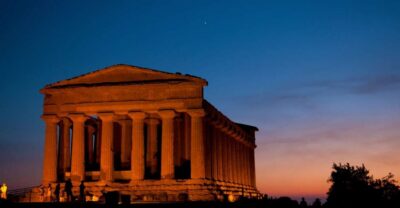
Valley of the Temples Skip-the-Line Sunset Tour
Read our review →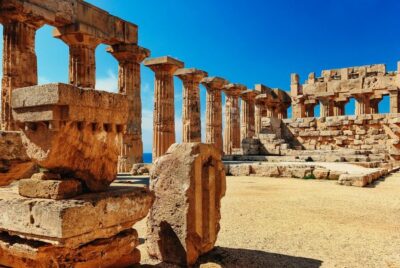
Agrigento and the Valley of the Temples Day Tour
Read our review →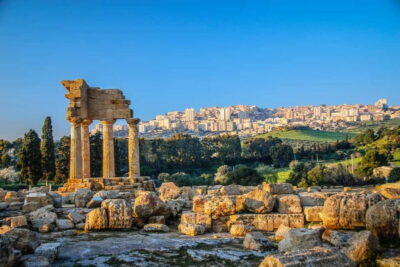
Valley of the Temples Ticket & App Audioguide
Read our review →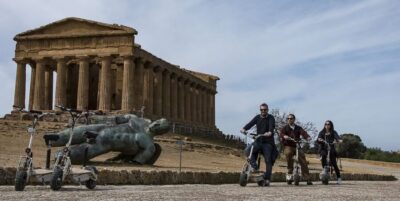
Valley of the Temples and Scala dei Turchi Day Trip
Read our review →
Catania: Valley of the Temples and Turkish Steps with Snack
Read our review →
Valley of the Temples Entry Ticket & Audio Guide
Read our review →Browse the lists this tour appears in