
Review · MUMBAI
Mumbai: Private tour for Kanheri Caves and Golden Pagoda
Ancient caves, golden silence, one long Mumbai day. I like the contrast between Kanheri’s stone meditation cells and the Golden Vipassana Pagoda’s shining Burmese-style design. I also like having a private English-speaking guide, air-conditioned transport, and time to explore without being tied to a large group. The main drawback is the travel time and changing transport, especially on weekends when Sanjay Gandhi National Park and the ferry can become very crowded.
This is a good choice if you want more than city streets and shopping. The caves offer inscriptions, carved halls, and a clear sense of monastic life, while the pagoda brings a quieter spiritual note. Guides such as Aryan and Nikheil have been praised for their warmth, clear explanations, and quick humor, but you should wear firm shoes and avoid the monsoon if possible.
Key points to know before booking
- Kanheri contains 109 rock-cut caves, including small monk cells and larger worship halls.
- The main hall has a seven-meter Buddha surrounded by 34 carved pillars.
- Around 100 inscriptions appear in scripts including Brahmi, Devanagari, Pallavi, and Sanskrit.
- The Golden Pagoda requires more than a car ride, with a short ferry crossing and, according to one account, a tuk-tuk ride on the far side.
- Weekday mornings are the smart choice, since weekend crowds can fill the park bus and ferry.
- The $21 price is strong value if your pickup, guide, car, and return transfer are included, though entrance tickets and food cost extra.
Why this two-part Mumbai outing works
Mumbai can feel all motion and noise. This outing gives you two very different pauses from it.
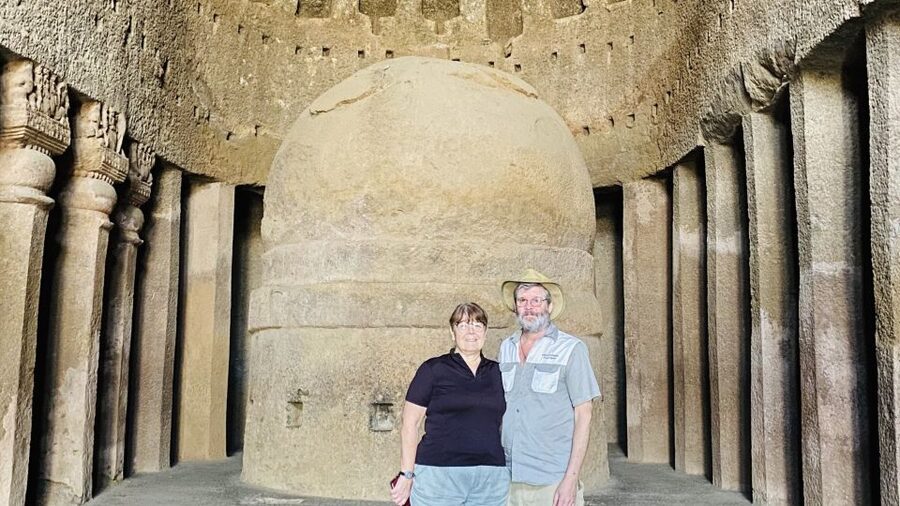
Kanheri Caves sit inside Sanjay Gandhi National Park, among trees and open country within the city’s limits. The site is not a single cave with one photo stop. It is a large complex of 109 caves carved from basalt, with spaces made for prayer, teaching, shelter, and daily monastic life.
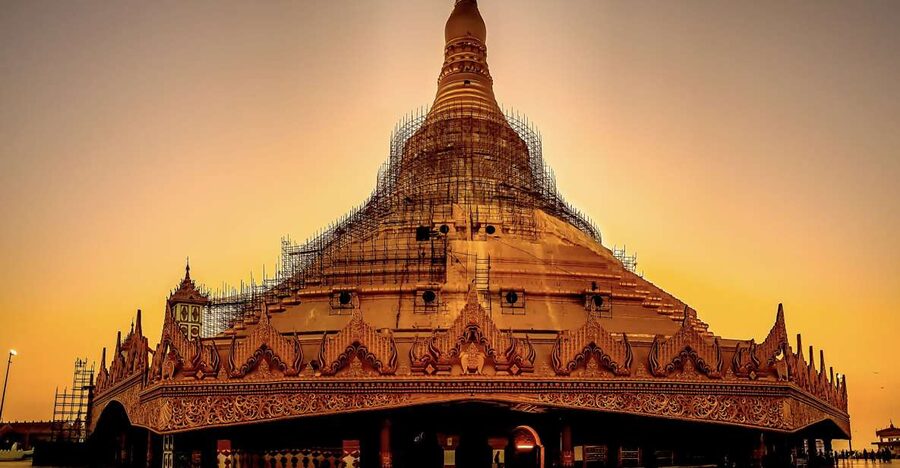
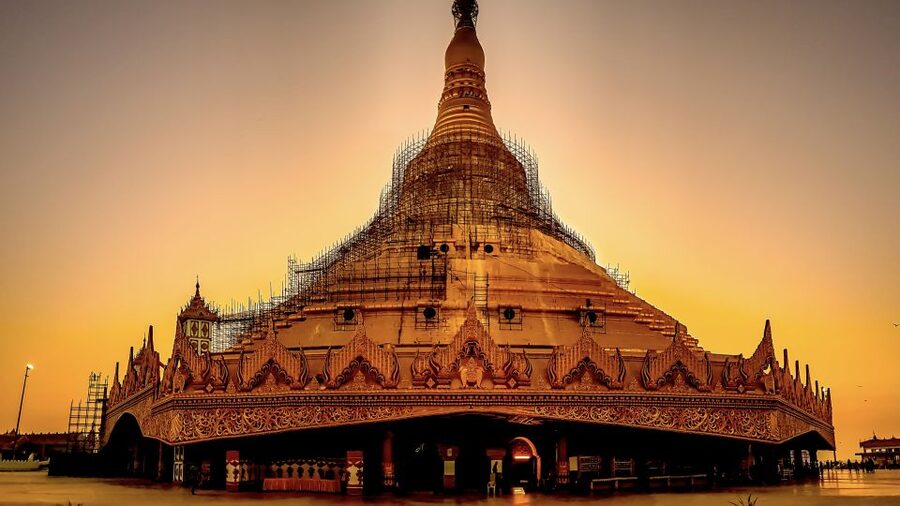
The Golden Vipassana Pagoda changes the mood completely. Its exterior catches the sun, and its Burmese-inspired form feels bright and ceremonial after the darker rock chambers at Kanheri. Inside are relics associated with Gautama Buddha, and the building is designed without supporting pillars.
I like this pairing because it gives you history and living spiritual practice in one day. Kanheri asks you to look closely at stonework and inscriptions. The pagoda asks you to slow down and take in space, light, and quiet.
The experience is sold as lasting from 2.5 to 6 hours, depending on your chosen option, starting time, hotel location, traffic, and how the transfers work. From much of Mumbai, the drive to Kanheri alone can take about one to one and a half hours. Check the exact timing before you book, since this is not a quick central-Mumbai stop.
More Cave Temple Tours in India
- Mumbai: Kanheri Caves and The Golden Pagoda Temple
★ 4.7 · 108 reviews - Sanjay Gandhi National Park+ Kanheri Caves + Temple +Tigar Safari
★ 5.0 · 54 reviews - Mumbai: Buddhist Kanheri Caves with Golden Pagoda Temple
★ 4.8 · 47 reviews
Reaching Kanheri through Sanjay Gandhi National Park
Pickup can be arranged from your Mumbai accommodation, or you may be asked to meet at the main entrance of Sanjay Gandhi National Park. If you have hotel pickup, wait in the lobby about five minutes before the agreed time. The air-conditioned car is useful here, since Mumbai traffic can make the approach slow and tiring.
The park is one of Asia’s prominent national parks, and the drive adds a welcome change from the city. You might see monkeys, deer, and birds along the way. One visitor specifically noted seeing all three, which gives you another reason not to spend the whole ride looking at your phone.
If you meet at the park entrance, allow extra care with directions and timing. The stated meeting point is the main entrance, not the caves themselves. Your guide should then lead you through the park access and onward to the cave area.
Weekend timing deserves serious attention. Sanjay Gandhi National Park also attracts people heading to its small waterfalls and bathing areas. On busy days, the park bus can be packed. A weekday morning should give you a calmer start and less pressure at the access points.
Five important caves and the life of the monks
The guided visit focuses on five significant caves rather than trying to cover every corner of the site. That is sensible. With 109 spaces, an unstructured visit could become a tiring march through similar-looking chambers.
The smaller caves are called viharas. These served as resting and living spaces for monks. Their plain cells help you picture the routine behind the grander carvings: quiet rooms, shared work, study, and meditation.
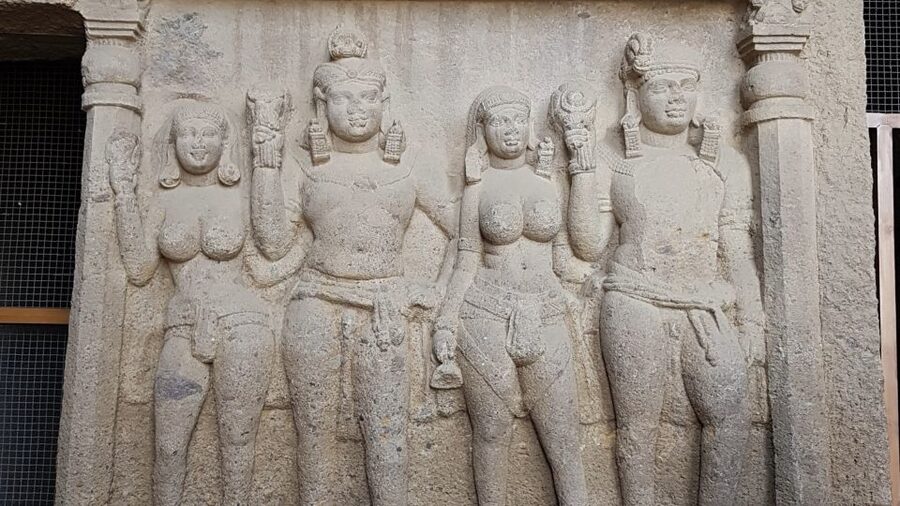
The larger chaityas were built for worship. Here you find carved Buddhist figures and more formal architectural features. The contrast between the modest cells and ceremonial halls is one of the most useful things a guide can explain. The site becomes easier to understand when you see it as a working religious center, not just a collection of old rooms.
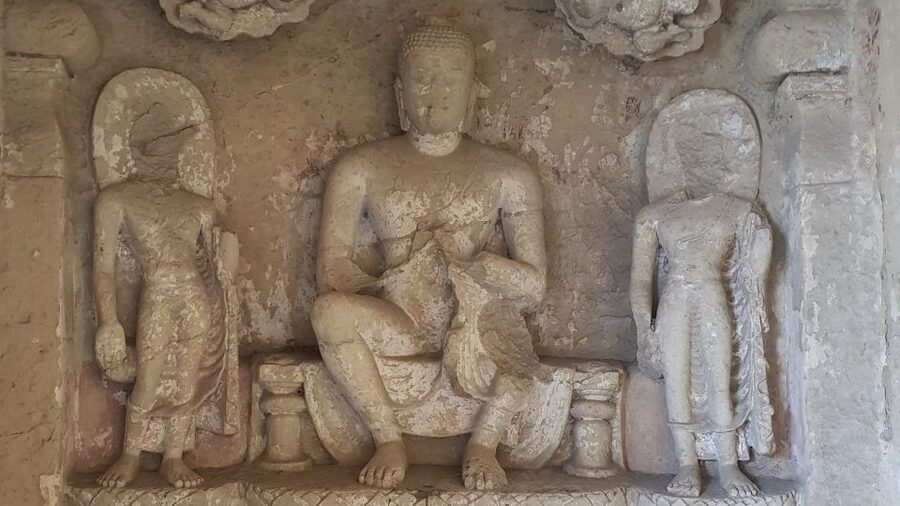
The major hall contains a seven-meter-high Buddha figure. Thirty-four carved pillars line the space, creating a strong sense of order and scale. One unusual feature is the eleven-headed Avalokiteshwara, a form associated with compassion in Buddhist tradition.
You also have about 100 inscriptions to look for. They appear in several scripts, including Brahmi, Devanagari, Pallavi, and Sanskrit. You will not understand every mark, of course, but the variety shows how the site connected with different periods and communities.
This is where the guide matters most. A good explanation turns marks on a wall into evidence of language, faith, and changing use. Aryan and Nikheil received particularly strong praise for being friendly and informative. The tone appears to be relaxed rather than stiff, which suits a site where you may want to ask simple questions as you walk.
What Kanheri feels like underfoot
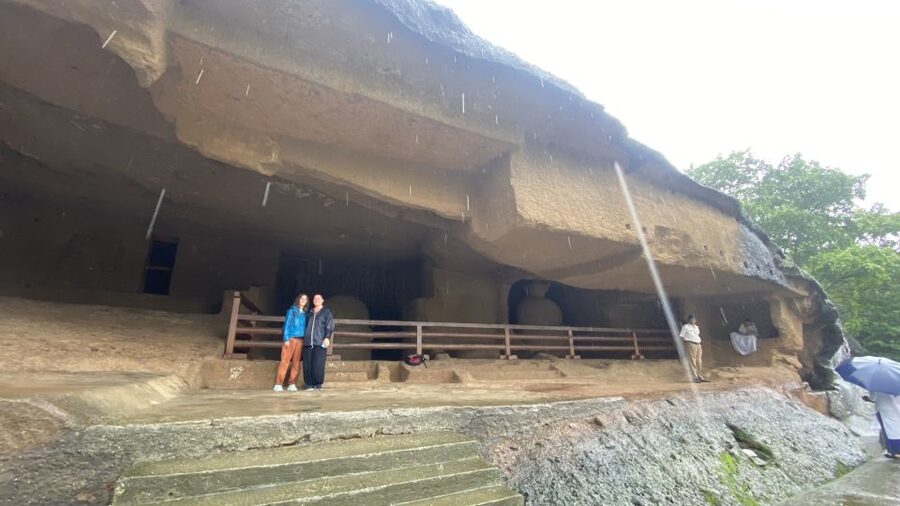
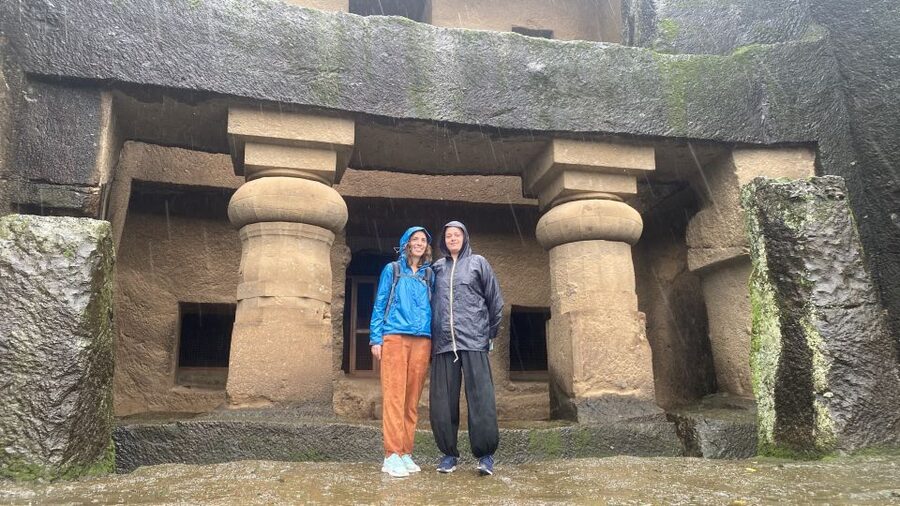
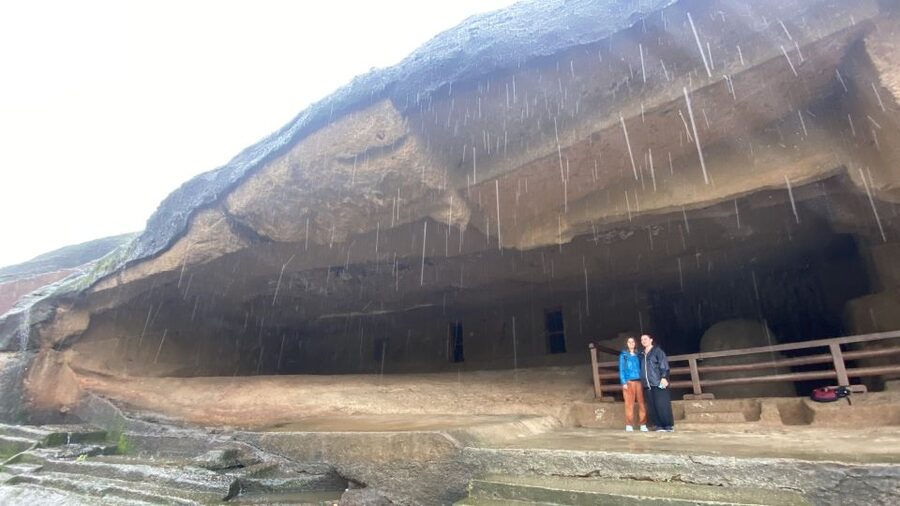
Bring comfortable shoes with a firm sole. Kanheri is a rock-cut site, and the visit includes walking over uneven surfaces and moving between cave areas. Flip-flops would be a poor choice, especially if the stone is damp.
The caves offer shade, but the approach and spaces between them can still feel warm. Carry your passport or another accepted form of identification, as this is listed among the required items. Large bags and luggage are not allowed, so pack light.
You receive guided time at the principal caves and some free time to wander. I like that balance. The guide gives you the framework, then you can pause by a carved pillar, study an inscription, or sit quietly in one of the meditation cells.
Do not expect every cave to be lavishly decorated. Much of the power comes from the scale of the work and the simple purpose of the rooms. If you prefer active sightseeing with constant spectacle, parts of Kanheri may feel restrained. If you enjoy archaeology, religious art, and places that reward patient looking, it should be one of the stronger stops in Mumbai.
More Private Temple Tours in India
- Full Day Varanasi Private Tour with Temples, Ghats & Rituals
★ 4.5 · 105 reviews - Full-Day Private Tour to the Kanchipuram Temples from Chennai
★ 5.0 · 73 reviews - Private Tour of Step well, Modhera Sun Temple & Patola saree weaving by car
★ 5.0 · 57 reviews - Ayodhya Private Tour & VIP Darshan -Special support for Seniors
★ 5.0 · 56 reviews
The ferry and tuk-tuk connection to the Golden Pagoda
After Kanheri, the tour continues toward the Global Vipassana Pagoda in Gorai. The stated plan includes a ferry crossing of about 10 minutes, followed by another 10-minute ferry after the pagoda on the return route.
There is an important practical detail here. One account explains that the ferry is a community crossing used by pedestrians and motorcycles, and it can become very full. Once you reach the other side, the car may not continue directly to the temple. You may need a tuk-tuk for the final section.
That extra ride is not necessarily a flaw. It makes the transfer feel more local and less polished than a private vehicle tour from start to finish. But you should know about it before booking, especially if you expect every part of the day to happen in the same air-conditioned car.
The crossing also adds time and depends on crowd levels. On a quiet weekday, it may be easy. At busy times, motorcycles and pedestrians share limited space. Keep your bag small, stay with your guide, and allow flexibility rather than planning a tight evening appointment afterward.
The Golden Vipassana Pagoda in Gorai
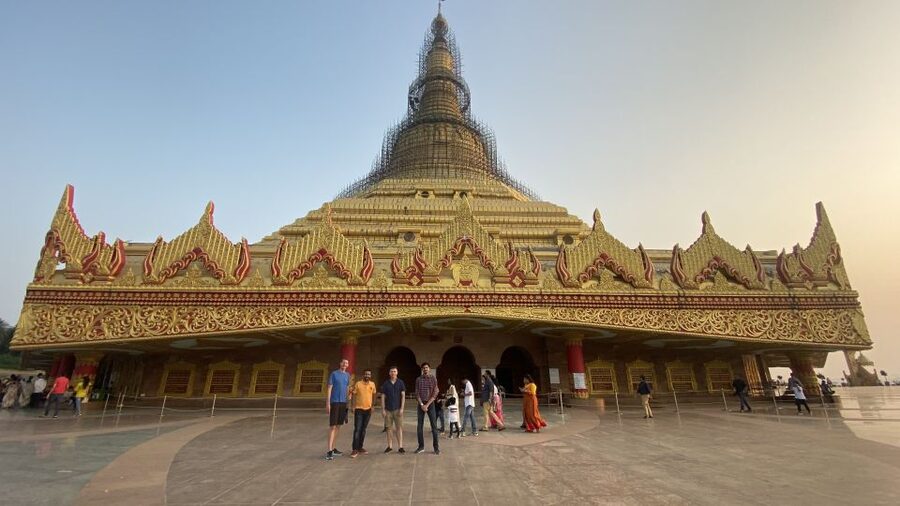
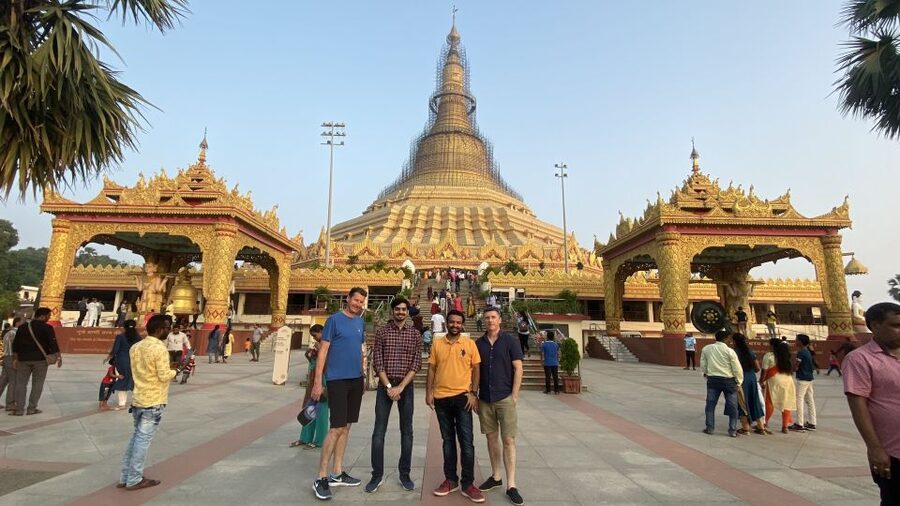
The pagoda is the visual counterpoint to Kanheri. Its gold-colored exterior catches sunlight and can appear brilliantly bright against the surrounding greenery. After the dark basalt and carved interiors of the caves, the change is immediate.
The design draws on Burmese Buddhist architecture. The building has no supporting pillars, a detail that reflects both careful engineering and the traditions behind the structure. Inside, relics of Gautama Buddha are kept here, making the site important not only as an architectural attraction but also as a place of devotion.
You are given about an hour for sightseeing. Use it to look at the exterior, enter the main space, and take in the calmer setting. The pagoda is surrounded by greenery and offers views toward the Arabian Sea, so the visit is not limited to the building itself.
The appeal is quiet rather than busy entertainment. You may find the atmosphere especially welcome after Mumbai traffic, park crowds, and the cave walk. Keep your voice low and treat the site as a spiritual place, not just a photo stop.
One point to keep in mind is that the pagoda portion may feel shorter than the Kanheri visit. The caves have many rooms and details to discuss. The pagoda is more about scale, light, design, and stillness. That difference works well, but it helps to set the right expectation.
Guide quality and the value of a private group
The strongest part of the service is the guide. Aryan was praised for making the cave and pagoda easier to understand, while Nikheil was described as friendly, informative, and good company. Another booking received fast communication after being made on the same day.
A private group gives you room to ask questions and set a comfortable pace. You can spend more time on the inscriptions if that interests you, or move along when the heat and uneven ground begin to wear you down. A guide can also help you manage the transfers, which matters once the ferry and tuk-tuk enter the picture.
The tour is in English. If you need another language, this is not the right match based on the available details.
At $21 per person, the value is good if the price is applied as described and you use the hotel pickup and return. You are paying for the car, driver arrangements, English-speaking guide, and a private format rather than only admission to two sites. Entry tickets are not included, and neither are food or drinks, so your final spending will be higher than the headline amount.
For a solo visitor or couple, the price is particularly appealing if shared costs are not inflated by a large package. For a larger private group, confirm how the per-person rate changes and exactly what vehicle is provided.
Timing, crowds, and the best day to go
Choose a weekday morning if your schedule allows. This is the clearest practical lesson from the available information.
Weekends can bring heavy local crowds to Sanjay Gandhi National Park. The park bus may be full, and the route toward the Golden Pagoda can also feel crowded at the ferry. The monsoon is another period to avoid if you want easier movement and more predictable conditions.
The total duration may be as short as 2.5 hours or as long as 6 hours. That broad range suggests you should check the selected option carefully. Traffic from your hotel can add a great deal of time, and the cave, ferry, pagoda, and return stages do not all take the same amount of time.
Do not schedule an important flight, train, or formal dinner immediately afterward. Mumbai traffic is hard to predict, and this outing includes several transport changes. The tour includes hotel drop-off, but you should still leave a sensible buffer.
Who should book this Mumbai experience?
I would recommend it to you if you want a private introduction to Buddhist sites, enjoy historic architecture, and do not mind a day with several forms of transport. It also suits photographers, culture-focused visitors, and anyone who wants a break from central Mumbai’s traffic and commercial districts.
It is a good fit for first-time visitors who want a guide to explain what they are seeing. The scripts, cave names, Buddha image, Avalokiteshwara carving, and monastic cells are much easier to appreciate with context.
You may want a different outing if you dislike uneven walking, crowded public crossings, or changing from car to ferry to tuk-tuk. It is also less suitable if your available time is very tight. The drive alone can be lengthy, and the actual duration depends on traffic and crowd conditions.
Should you book the Kanheri Caves and Golden Pagoda tour?
Book it if you want two contrasting Buddhist sites, a private English-speaking guide, and hotel transport at a modest price. Kanheri gives you stone, inscriptions, cells, and carved worship halls. The Golden Pagoda gives you sunlit architecture, relics, greenery, and a quieter hour near the Arabian Sea.
For the best version of the day, choose a weekday morning, wear firm shoes, carry identification, leave large bags behind, and confirm the ferry and tuk-tuk arrangements before setting out. If you accept that this is a full outing rather than a quick attraction visit, it offers a thoughtful and unusual side of Mumbai.
FAQ
How long does the tour take?
The stated duration is between 2.5 and 6 hours. The exact time depends on the selected option, starting time, hotel location, traffic, and the transfers between the sites.
Is hotel pickup included?
Hotel pickup and drop-off are included when that option is selected. Pickup is optional, and some visitors may instead meet the guide at the main entrance of Sanjay Gandhi National Park.
What transport is used during the experience?
The tour includes an air-conditioned car, a ferry crossing of about 10 minutes in each direction, and potentially a tuk-tuk transfer near the Golden Pagoda. The car may not go directly to the pagoda after the ferry.
Are entry tickets included?
No. Entry tickets are not included in the stated price. Food and drinks are also not included.
What should I bring?
Bring a passport or accepted identity document, comfortable shoes, and a passport copy if needed. Large bags and luggage are not allowed.
Can I cancel or pay later?
You can cancel up to 24 hours before the experience for a full refund. A reserve-now, pay-later option is also available.
Just added around India
- South India Tour- Temple Architecture and Backwaters★ 5.0 · 7 reviews
- 8 Days Private South India Temple Tour with 4 Star Luxury Hotels★ 5.0 · 3 reviews
- Chennai City Highlights – Government Museum & Temple Discovery★ 4.0 · 7 reviews
- Full Day Tour of Konark Temple and Puri★ 5.0 · 7 reviews
- Divine Delhi: Full-Day Tour of Temples & Spiritual Sites★ 4.5 · 3 reviews
- 6-hour Temples tour of Bhubaneswar including hotel pick-up & drop-off★ 4.0 · 3 reviews
- Bhubaneswar city tour & Konark Sun Temple in private car with guide★ 5.0 · 29 reviews
- Puri Jagannath, Konark Sun temple, Pattachitra art in best of Odisha in 2 days★ 5.0 · 10 reviews
Cave Temple Tours, compared.
Krabi: Tiger Cave Temple, Emerald Pool and Hot Springs Tour
Read our review →
From Kuala Lumpur: Batu Caves Cultural Temple Tour
Read our review →
Ao Nang: Hot Spring, Emerald Pool & Tiger Cave Temple Tour
Read our review →
All day Krabi Jungle Tour (Hot Spring Water, Emerald Pool, Tiger Cave Temple)
Read our review →
Discover Krabi – Emerald Pool, Hot Springs & Tiger Cave Temple
Read our review →
Kandy to Sigiriya Day Tour and Dambulla cave temple with private vehicle
Read our review →
Jungle Tour to Emerald Pool, Krabi Hot Spring and Tiger Cave Temple
Read our review →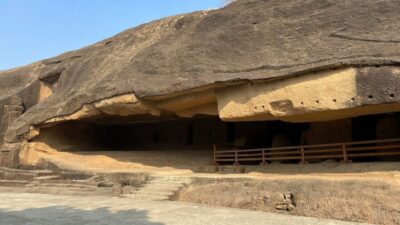
Browse the lists this tour appears in