
Review · RAšKA DISTRICT, SERBIA
From Belgrade: Studenica monastery & Zica monastery
Serbia’s medieval heart lies beyond Belgrade. This full-day trip takes you into the Raška District, where Žiča and Studenica monasteries connect royal power, Serbian Orthodox faith, and some of the country’s finest medieval art. I like the strong historical focus, and I also like that the tour includes mountain roads and an Ibar Gorge viewpoint rather than treating the monasteries as isolated stops. The main drawback is the long drive: you spend about two and a half hours reaching Žiča, then more than three hours returning to Belgrade.
The small-group format, limited to 10 people, should make the long day easier and allow room for questions. Guides such as Jovana, Miloš, and Stefan have been praised for warm, careful explanations, which matters here because the sites can mean much more once you understand the Nemanjić royal family and the Serbian Orthodox tradition. Dress modestly, wear comfortable shoes, and remember that this is a rain-or-shine outing.
Key points before you book
- Žiča was Serbia’s coronation church: Seven kings were crowned here, linking several royal dynasties and centuries of Serbian history.
- Studenica is a UNESCO World Heritage site: Its 12th-century foundation and 13th- and 14th-century Byzantine paintings make it the day’s major cultural stop.
- The drive is part of the experience: You cross from Belgrade toward the mountains, with views of the Ibar Gorge and the medieval Maglič fortress.
- Lunch is not included: You get about an hour in Kraljevo for food and free time, so bring spending money.
- The group stays small: A maximum of 10 participants gives the guide a better chance to explain details and answer questions.
- The tour costs $152 per person: Hotel pickup, private transport, and an English-speaking guide are included, but meals and drinks are extra.
Why these monasteries are worth a long day from Belgrade
Belgrade is Serbia’s political and cultural center, but it does not tell the whole story of the country. To understand medieval Serbia, you need to head south toward the Raška District. That is where the Nemanjić dynasty built churches, monasteries, and the foundations of the medieval Serbian state.
This excursion focuses on two places with different roles. Žiča is closely tied to royal ceremony. Studenica is the grander artistic and spiritual center, with major examples of Byzantine wall painting and a long connection to Serbian Orthodox life.
I find that pairing useful. You are not seeing two similar churches and trying to remember which is which. Instead, Žiča introduces the royal story, while Studenica gives you the larger setting and the finest art.
The pace is also sensible for such a distant destination. You have time for a guided visit at both monasteries, a proper break in Kraljevo, and a short viewpoint stop. Still, this is not a lazy countryside outing. With roughly 12 hours from pickup to return, you should treat it as a serious day trip.
A few more temple visits around the world worth a look
- Lisbon: Jerónimos Monastery Entrance Ticket
★ 4.1 · 14,164 reviews - Angkor Wat Sunrise or Sunset Tour with Guide from Siem Reap
★ 5.0 · 12,109 reviews - Teotihuacan, Guadalupe Shrine & Tlatelolco Day Tour with Lunch
★ 5.0 · 11,603 reviews
The long road south from Belgrade
The tour begins with hotel pickup in Belgrade and a private van journey of about two and a half hours to Žiča. That is a substantial ride, especially if you are accustomed to short city tours. The reward is access to sites that are too far away for a quick independent visit from the capital.
The road also helps place the monasteries in their setting. As the city gives way to hills and mountain scenery, the day shifts from modern Serbia to the medieval world that shaped its religious and political identity.
Your guide is an important part of this first stretch. The strongest feedback has focused on clear explanations, personal warmth, and careful attention. Jovana and Miloš were specifically praised for making the history accessible, while Stefan was described as both helpful and a pleasure to spend the day with. That sort of guide can turn a long transfer into useful preparation rather than dead time.
Because the exact departure hour can vary, check availability for the date you want. The stated duration is 12 hours, but road conditions and the pace of the group can affect the final return time. I would avoid scheduling an evening commitment in Belgrade.
Žiča Monastery and seven royal coronations
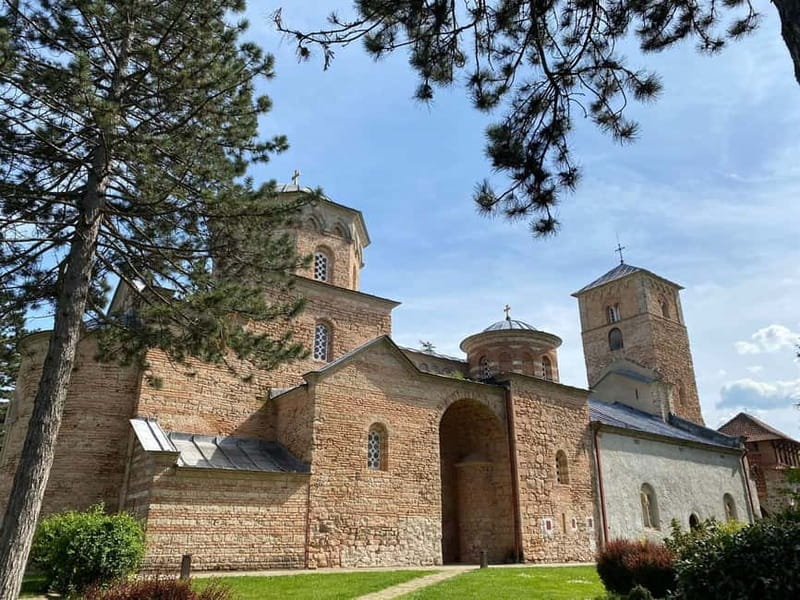
The first major stop is Žiča, with about an hour and a half for a visit, guided tour, walking, and sightseeing. This gives you enough time to look around without rushing through the church.
Žiča is known as a coronation church where seven kings were crowned. That fact gives the site a direct connection to the Nemanjić dynasty and to later Serbian royal lines. The monastery helps explain how religious authority and royal authority worked together in medieval Serbia.
I would pay close attention to the guide here. The buildings and grounds may appear calm and simple at first, but the meaning of the site comes from the people and ceremonies attached to it. This is where the tour’s historical framing matters most.
Žiča also provides a gentle introduction to the Serbian Orthodox character of the day. You are visiting an active sacred setting, not only an archaeological monument. Quiet behavior and suitable clothing are important. Sleeveless shirts are not allowed, and flash photography is prohibited.
The visit is long enough for a measured walk, photographs where permitted, and an explanation of the church’s place in Serbian history. It is not designed for an extended study of every architectural detail. If you want to linger over religious art, the later stop at Studenica offers more to examine.
Kraljevo gives the day a practical pause
After Žiča, the group stops in Kraljevo for about an hour. This is the scheduled time for lunch and free time, and food and drinks are not included in the tour price.
An hour is enough for a useful break, but you should not expect a long restaurant meal with plenty of spare time. If you are slow to order or prefer a leisurely lunch, keep an eye on the clock. A snack in your bag can also help, especially if you want to use part of the stop for a quick walk.
This pause breaks up the long driving schedule. Without it, the day would feel like one continuous transfer between two religious sites. Kraljevo also gives you a chance to reset before Studenica, the more substantial visit.
Since the tour price excludes meals, budget separately for lunch and drinks. At $152 per person, the package is aimed at convenience and interpretation rather than a low-cost bus ride. Hotel pickup, private transportation, and a professional English-speaking guide are included, which may justify the price if you value an organized day and do not want to arrange the distant route yourself.
Same place, a different morning at the gates:
- From Bangkok: Ayutthaya Temples Guided Tour with Lunch
★ 4.7 · 10,535 reviews - Siem Reap: Angkor Wat: Small-Group Sunrise or Sunset Tour
★ 5.0 · 9,444 reviews - Athens: Cape Sounion & Poseidon Temple Sunset Half-Day Trip
★ 4.8 · 8,241 reviews - Ubud: Monkey Forest, Jungle Swing, Rice Terrace, and Water Temple
★ 5.0 · 7,160 reviews
The Maglič viewpoint and the Ibar Gorge
The route includes a short photo stop at a viewpoint, lasting about 10 minutes. From the road, you can see the hills around Maglič, one of the best-preserved and most attractive medieval fortifications in Serbia, dating from the 13th century.
Do not expect a full castle visit here. The schedule lists a viewpoint and photo stop, not an extended walk to the fortress. That distinction matters if Maglič is your main interest. You will see the setting and get a sense of its defensive position, but the monasteries remain the focus of the day.
The view toward the Ibar Gorge is one of the pleasures of taking this tour by road. It adds a strong visual sense of place to the history. These monasteries were not built in an anonymous setting. They belong to a mountainous part of Serbia where valleys, rivers, and fortified hills shaped travel and power.
Ten minutes passes quickly, so have your camera ready. The stop is brief, but it gives the day a welcome change of pace before the longer visit at Studenica.
Studenica, Serbia’s great monastery complex
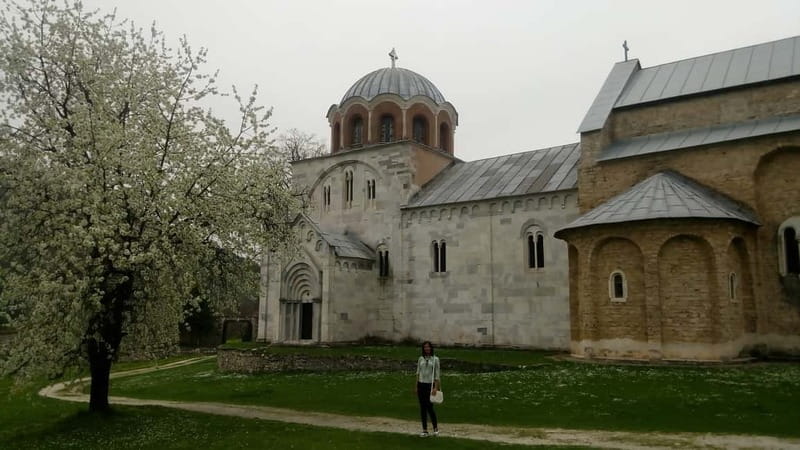
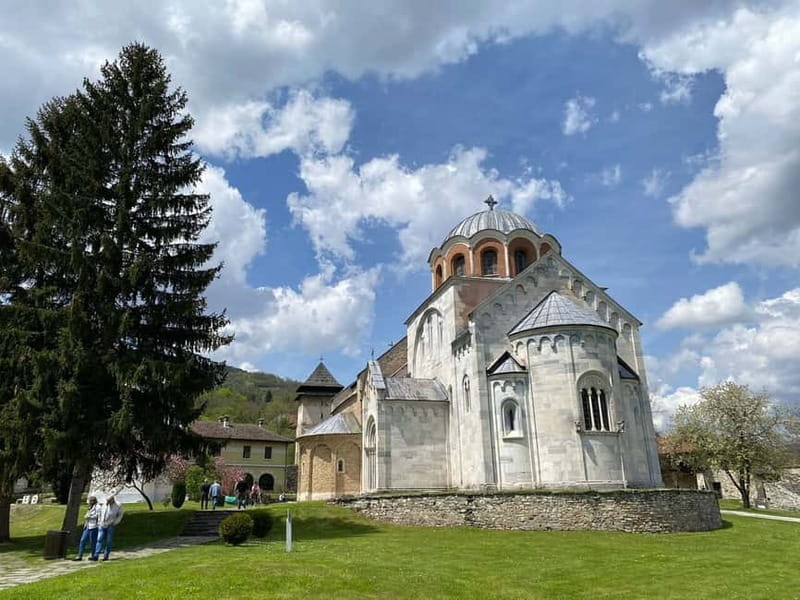
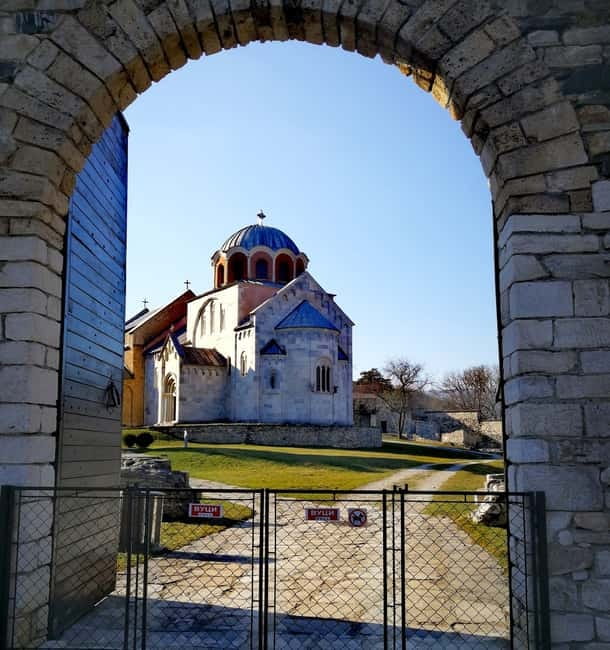
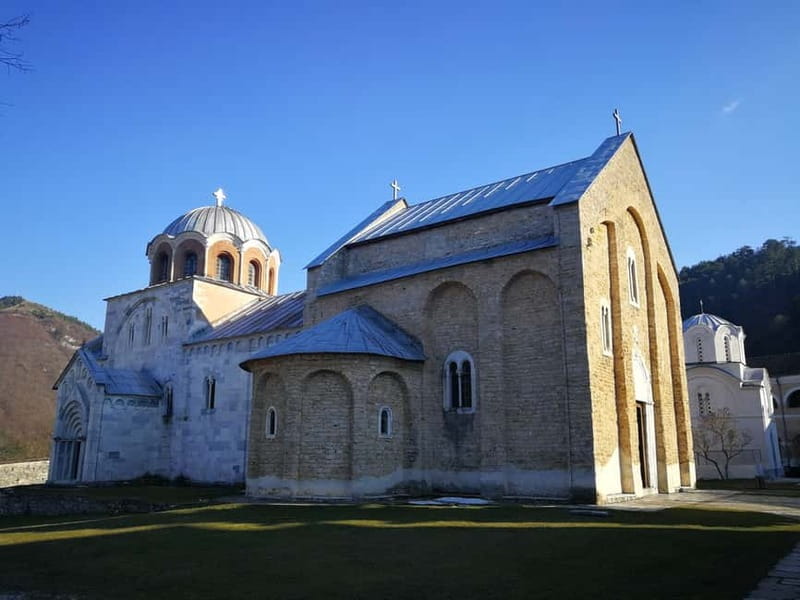
Studenica is the main event. The monastery was established in the late 12th century and is protected as a UNESCO World Heritage site. You have about two hours for the visit, guided tour, sightseeing, and photographs.
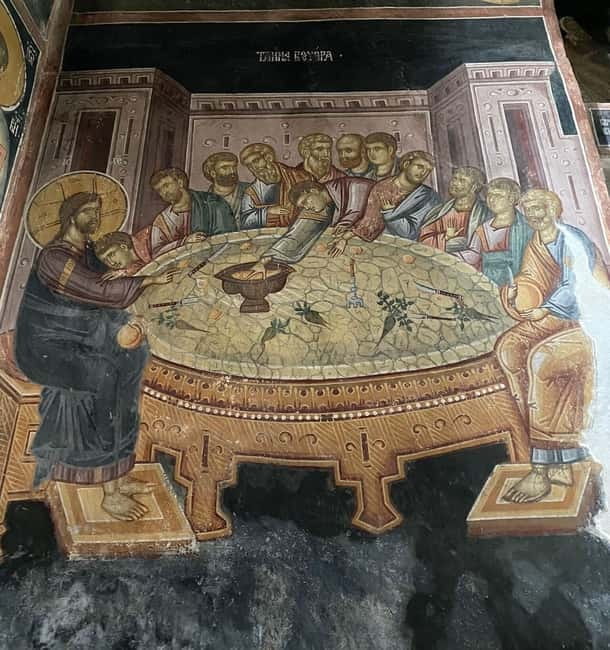
The monastery is often described as the largest and most important of Serbia’s Orthodox monasteries. Its value comes from more than size. Studenica holds major 13th- and 14th-century Byzantine paintings, making it one of the key places in Serbia for seeing medieval Orthodox art in its original religious setting.
I would give the guide your full attention before walking around on your own. The paintings are not simply decoration. Their subjects, arrangement, and style reflect the beliefs and artistic connections of the period. A good explanation helps you see why Studenica is important, rather than reducing the visit to a few old walls and painted interiors.
The monastery is also part of Serbia’s Valley of the Kings, a group of royal and religious sites linked to the country’s medieval rulers. Here, the Nemanjić family appears again, not only as political founders but also as builders of Serbian spiritual life and saints of the Serbian Orthodox Church.
That combination makes Studenica rewarding for different kinds of visitors. If you enjoy art, the Byzantine paintings are the main attraction. If you care about royal history, the founding dynasty gives the monastery a clear place in Serbia’s story. If you prefer quiet places, the setting and religious purpose offer a peaceful break from Belgrade’s urban energy.
The two-hour visit should feel much less rushed than the short viewpoint stop. Even so, you may want to choose your priorities. Focus on the guide’s explanation, the central church spaces, and the artwork rather than trying to record every corner with your camera. Flash photography is not allowed, and respectful conduct is expected.
What the guide adds to the day
This tour depends heavily on the guide. The monasteries have real substance, but their importance is not always obvious without context. The best experience will come from asking questions about the Nemanjić rulers, royal coronations, Serbian Orthodoxy, and the artwork at Studenica.
The guide team has received especially strong praise for clear explanations and personal care. Jovana and Miloš were singled out for combining historical knowledge with warmth. Stefan was praised for making the day both informative and enjoyable. Other feedback highlights precise explanations of Serbian history and the Serbian Orthodox Church.
The small-group limit of 10 is useful here. A guide can speak to the whole group without shouting, and you have a better chance to ask about details that catch your eye. One person even had the guide to themselves, which created an especially conversational day. You should not assume a private tour, but the group size is still modest.
The tour is offered in English. If you want more than photographs, listen actively and ask questions. That is where much of the value lies.
Is $152 a fair price?
At $152 per person, this is not a bargain day trip. The price reflects the distance from Belgrade, the private van, hotel pickup and drop-off, the small-group limit, and the professional English-speaking guide.
You still pay for lunch and drinks, so the final cost will be higher. On the other hand, organizing two far-flung monasteries independently would require more planning, transport research, and timing. The private transportation also removes the need to navigate unfamiliar roads or coordinate connections.
I think the price makes sense for visitors who want historical interpretation and a straightforward way to reach both sites in one day. It is less compelling for someone who only wants a scenic drive or a quick photograph. You are paying for access, time, and explanation, not just transport.
Free cancellation up to 24 hours before departure and the option to reserve now and pay later add useful flexibility. Still, the main value question is simple: are Studenica and Žiča important enough to justify giving up a full day in Belgrade? For anyone interested in Serbia beyond the capital, I think they are.
Who should book this monastery tour?
I would choose this trip if you want to understand Serbia’s medieval foundations, see major Orthodox sites, and have a guide explain what you are looking at. It suits visitors who enjoy history, religious art, royal stories, and mountain scenery.
It also works well if you prefer a planned day with hotel pickup and a small group. The long drive is easier when someone else handles the route and gives context along the way.
I would hesitate if you dislike long van journeys, need a relaxed schedule, or mainly want to visit Maglič fortress. Maglič is viewed from the road rather than explored on foot, and the monastery visits require respectful clothing and conduct.
Bring comfortable shoes. Wear clothing that covers your shoulders, avoid sleeveless shirts, and be prepared for rain or sun because the tour runs in all weather.
Should you book it?
Book this tour if you want a serious historical day outside Belgrade, especially if the Nemanjić dynasty, Serbian Orthodox art, and medieval monasteries appeal to you. Studenica is the clear reason to go, while Žiča adds the royal connection and makes the story easier to follow.
Skip it if 12 hours feels too long or if you want a flexible, self-paced outing. For the right visitor, though, the distance is worthwhile. You return with a better sense of Serbia as a country shaped not only by its capital, but also by monasteries, kings, artists, and mountain valleys.
FAQ
How long is the tour from Belgrade?
The tour lasts 12 hours. The drive to Žiča takes about two and a half hours, followed by visits to Žiča and Studenica, a break in Kraljevo, a viewpoint stop, and the return to Belgrade.
What is included in the price?
Hotel pickup and drop-off, private transportation, and a professional English-speaking guide are included.
Are lunch and drinks included?
No. The tour includes about one hour in Kraljevo for lunch and free time, but food and drinks are not included.
Is the tour available in English?
Yes. The tour has a live English-speaking guide.
How large is the group?
The tour is limited to 10 participants.
What should I wear and bring?
Bring comfortable shoes and wear clothing that is suitable for visiting Orthodox monasteries. Sleeveless shirts are not allowed, and flash photography is prohibited. The tour operates in rain or shine.
Just added around the world
- Chiang Mai Temples & City★ 5.0 · 10 reviews
- Chiang Mai Temples and Market Tuk Tuk Night Tour★ 5.0 · 95 reviews
- Full Day Chiang Rai 3 Temples White, Blue,Big Bhudha Temples★ 4.5 · 11 reviews
- Private Chiang Mai Temple Tour with Doi Suthep and Wat Umong★ 5.0 · 52 reviews
- Chiang Mai Best City Tour with Doi Suthep & Iconic Temples★ 4.5 · 24 reviews
- Chiang Mai Old City & Temples Guided Walking Tour – 3 Hrs★ 4.5 · 34 reviews
- Chiang Mai Old City & Temples 3 hour Twilight Walking Tour★ 5.0 · 9 reviews
- Chiang Mai Sticky Waterfall Dantewada and Banden Temple Tour★ 5.0 · 6 reviews