
Review · CHINA
200-year-old Hakka Residence Tour +Ancient Buddhist temple
Shenzhen has a past worth seeing. This 2.5-hour tour takes you away from the city’s towers and into an older China, with a 200-year-old Hakka housing complex, a 1,000-year-old Buddhist temple, and the restored Longgang River wetland. I like the strong mix of history and scenery, and I like that the group is limited to five people. The main consideration is the pace: this is a walking tour, with no meal or bottled water included, so you need comfortable shoes and your own drink.
I also like the easy starting point at Nanlian Metro Station on Line 3. From Luohu, the trip takes about 60 minutes by MTR, making this a practical half-day escape from central Shenzhen. Guide Jimmy has received especially warm praise for his clear English, humor, patience, and ability to make Chinese history easy to follow. The tour is not suitable for pregnant women, and anyone hoping for a relaxed ride with little walking should choose another outing.
Key points at a glance
- The Hakka residence covers about 25,000 square meters: More than 300 rooms form a large clan compound built by the Luo family about 200 years ago.
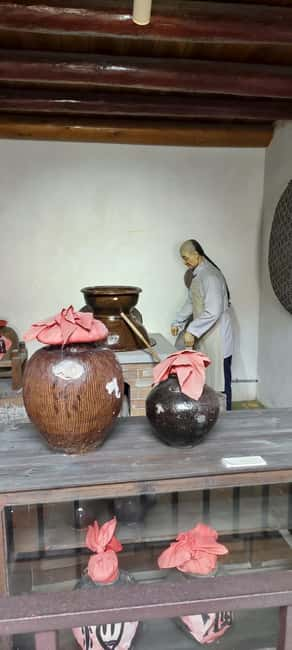
- Original domestic details remain: Furniture, kitchens, classroom spaces, and the old layout help you picture daily life in imperial China.
- The Buddhist temple is about 1,000 years old: Its many buildings and pagoda dedicated to a female deity create a calm stop for prayer, photos, and quiet observation.
- Longgang River tells a modern environmental story: The river was once heavily polluted, then improved through wetland restoration that helped return it to a more natural condition.
- The group is genuinely small: With no more than five participants and an English-speaking guide, you can ask questions without shouting across a crowd.
- The price reflects guided access: At $47 per person, transportation between the sites and an English tour are included, but food and water are not.
Why this Shenzhen tour is different
Shenzhen is often presented as a city of technology, shopping centers, and fast growth. That picture is accurate, but incomplete. Over roughly three decades, the city changed from a small settlement into a major modern center, and much of its older fabric disappeared beneath new construction.
This tour offers a useful correction. You are not simply looking at old buildings for a few photographs. You are using them to understand the people who lived in the area before Shenzhen became a global city.
The focus is on the Hakka people, who migrated from central China toward the Shenzhen area approximately 500 years ago. Their culture is closely tied to extended families, clan organization, and large shared residential compounds. The Luo family residence gives that story a physical shape.
I find this kind of outing more rewarding than a standard city sightseeing loop because the sites explain one another. The residence shows how people lived. The temple shows where spiritual life fit into the community. The river shows how the surrounding environment has changed.
A few more temple visits around China worth a look
- Mini Group Xian Day Tour to Terracotta Army, City Wall, Pagoda and Muslim Bazaar
★ 5.0 · 1,320 reviews - Beijing: The Temple of Heaven or Summer Palace Entry Ticket
★ 4.6 · 1,286 reviews - Beijing Classic Full-Day Tour including the Forbidden City, Tiananmen Square, Summer Palace and Temple of Heaven
★ 4.0 · 610 reviews
Meeting at Nanlian Metro Station at 2pm
The tour begins at 2pm at Nanlian Metro Station, Line 3, Exit C1. The Chinese name is 南联站 C 1出口, which is useful to have ready if you need to ask for directions.
The location makes sense for visitors staying around Luohu. The journey from Luohu takes about 60 minutes by MTR, so you should allow enough time to reach the station without rushing. Since this is a fixed afternoon start, arriving early is the sensible choice.
The metro ride is part of the transition from present-day Shenzhen to the older districts beyond the city center. You begin among the city’s efficient transport system, then spend the afternoon walking through historic buildings and a river wetland. That contrast is one of the pleasures of the tour.
Transportation between the tour sites is included. The available information does not specify the exact vehicle or travel time between each stop, so I would think of this primarily as a walking experience with transfers rather than a sightseeing ride.
Entering the Luo family Hakka residence
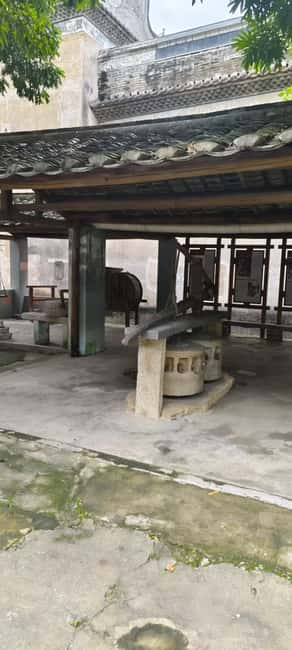
The main stop is a large Hakka housing complex built by the Luo clan about 200 years ago. It covers more than 25,000 square meters and contains over 300 rooms, making it far larger than a single historic house.
The scale matters. A small restored home can show you a bedroom or courtyard, but a clan compound can explain how an entire extended family organized its life. Here, the original layout remains visible, allowing you to see how rooms and shared areas were arranged.
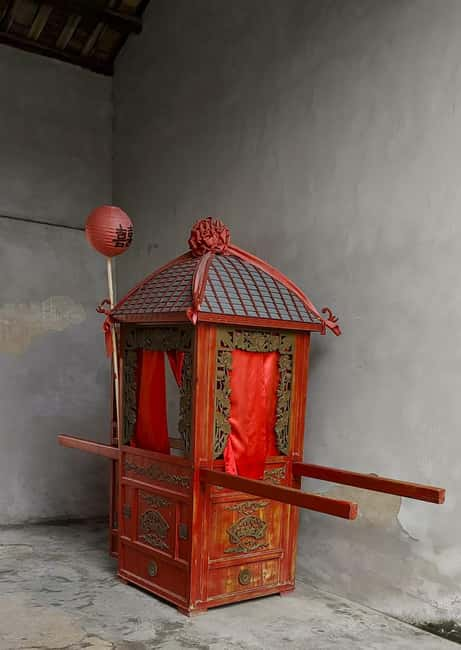
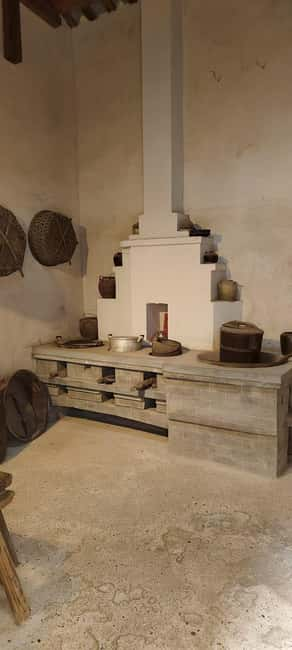
You can expect to see original furniture and historic household spaces. The kitchen is still intact and, according to the description, ready for cooking. That detail is especially useful because kitchens are often the first rooms to disappear or change in old residences. A preserved cooking area connects the architecture to ordinary daily routines.
The former classrooms add another layer. Children studied Confucianism there, offering a glimpse into education and family expectations during imperial China. I would pay close attention to these less glamorous spaces. A classroom and kitchen can tell you as much about past life as a decorated hall.
The residence is presented as a place to understand how ordinary people lived, rather than only a monument for famous figures. That makes the guide’s explanation important. Without context, a large compound can become a series of courtyards and wooden rooms. With a good guide, the layout begins to show family structure, work, education, and tradition.
Jimmy is particularly praised for making history entertaining without losing the facts. His English is described as excellent, and his patience with questions is a real advantage in a small group. If you want to ask about Hakka migration, household organization, or the meaning of different spaces, this setting should give you room to do so.
The main drawback is that the residence may feel less polished than a purpose-built museum. Its appeal comes from surviving structure and atmosphere, not from a modern exhibition design. You should expect historic rooms and original arrangements rather than large displays, dramatic lighting, or a long line of explanatory panels.
A quiet visit to the 1,000-year-old Buddhist temple
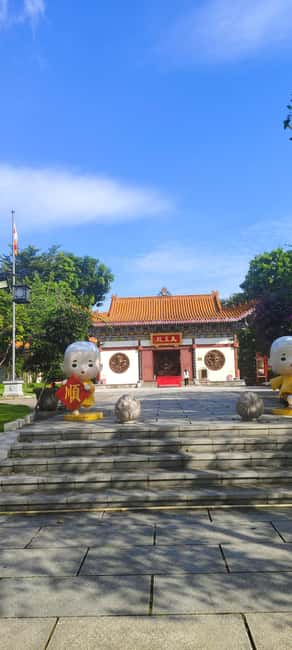
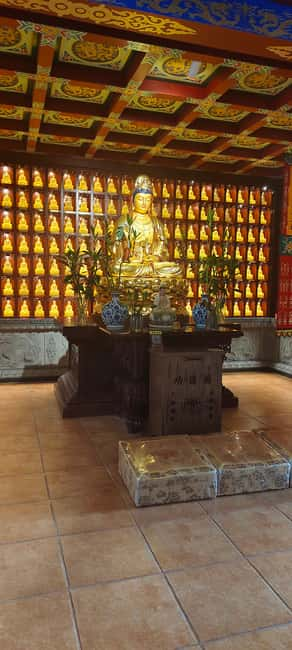
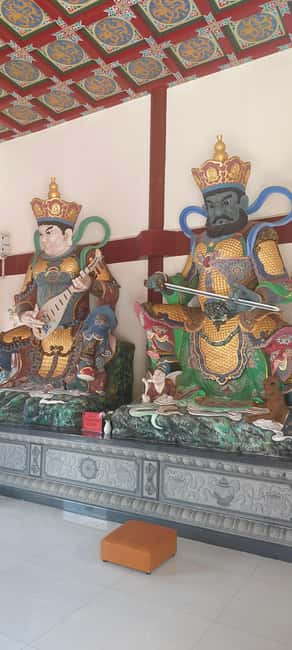
The second major stop is a Buddhist temple with a history of about 1,000 years. The temple is made up of several structures, creating a wider monastic setting rather than one isolated hall.
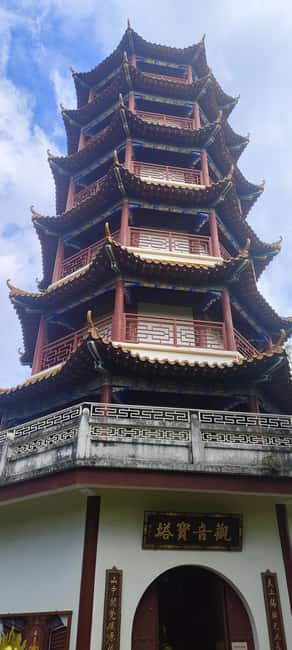
This is a calmer part of the afternoon. You can walk around the buildings, observe the religious setting, and learn how the temple fits into local life. The site includes a pagoda dedicated to a female deity. Visitors can make a wish there, following a practice connected with local prayer for luck and good fortune.
The temple has been renovated, but its age and layout still give the visit a sense of continuity. I like the contrast with the Hakka residence. The residence is about household life and clan structure. The temple shifts the focus toward belief, ceremony, and hopes for the future.
It is also the sort of place where respectful behavior matters. Keep your voice low, follow the guide’s instructions, and treat the religious structures as places of worship rather than just photo backgrounds. The ancient buildings are considered particularly good for pictures, but photography should not become the whole point of the stop.
The temple may appeal most to visitors who enjoy quiet places and cultural context. If you want an intense sightseeing schedule packed with major landmarks, this portion could feel slow. If you appreciate a peaceful pause after examining a large residence, it should be welcome.
Same place, a different morning at the gates:
- Temple of Heaven Ticket
★ 5.0 · 482 reviews - Temple Heaven, Lama Temple, Summer Palace & Peking Duck Bus Tour
★ 5.0 · 377 reviews - Best of Shanghai Day Tour, including Jade Buddha Temple & Bund & Yuyuan Garden
★ 4.0 · 338 reviews - Temple Heaven, Summer Palace, Lama Temple, Hutong Bus Tour
★ 4.7 · 319 reviews
Walking beside the Longgang River wetland
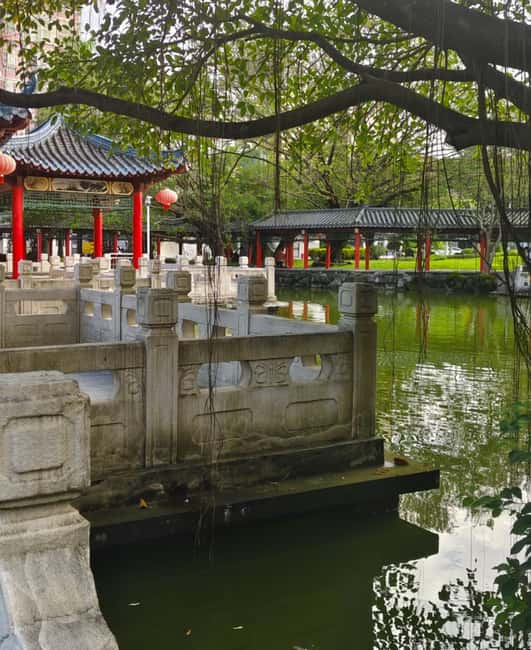
The final highlight is the Longgang River, a natural waterway that flows into the Shenzhen River, the river separating Shenzhen from Hong Kong.
The river’s story adds a modern environmental note to the tour. It was once among the most polluted rivers in Shenzhen. During the past decade, wetland restoration helped filter pollution and return the waterway to a more natural state.
This is not simply a scenic walk. The wetland shows how a city can repair part of its environment after decades of rapid growth. The setting also gives you a break from enclosed historic buildings. Instead of looking at walls, kitchens, and courtyards, you can enjoy open views along the water.
The description promises attractive scenery, though the exact walking route and length are not specified. I would not treat this as a dedicated nature hike. Think of it as a scenic part of a cultural walking tour, where the river provides space to observe Shenzhen’s changing relationship with its natural surroundings.
The river stop is also a good reminder that the tour is not frozen in the past. Hakka migration, clan residences, Buddhist traditions, urban expansion, and wetland restoration all belong to the same story. You see how the region developed, changed, and tried to repair some of the damage caused by that change.
What the small group adds
The maximum group size is five people. That is a major benefit for a history-focused tour.
In a large group, you often hear only the basic facts. With five people, you should have a better chance to ask follow-up questions and stay close to the guide during the walking portions. The small size also makes movement through older buildings easier and keeps the outing from feeling like a procession.
The guide is central to the experience. Jimmy is specifically praised for his humor, strong English, kindness, and patience. Another guide has also led the tour, so the exact guide may vary, but the activity is offered in English.
I would book this tour for someone who wants interpretation rather than just transport. The buildings and temple are the reason to go, but the explanations connect them to Hakka migration, Confucian education, Buddhist practice, and Shenzhen’s rapid modernization.
Is $47 a fair price?
At $47 per person, the tour is not the cheapest way to spend an afternoon in Shenzhen. Still, the price includes a live English-speaking guide and transportation between the sites. The small group also gives you a more personal format than a large coach excursion.
The value depends on your priorities. If you only want to see the outside of an old building, you could likely spend less by exploring independently. But independent visitors may miss the meaning of the rooms, the Hakka background, and the connection between the residence, temple, and river.
The price looks reasonable for travelers who want history explained clearly and prefer not to work out transport between several sites. It is less attractive for anyone mainly interested in food, shopping, or a broad survey of modern Shenzhen.
Meals and water are not included. Bring your own water, since the afternoon involves walking. Comfortable shoes are essential, and I would avoid treating this as a dress-up excursion.
Who should book this experience?
I would recommend it to first-time Shenzhen visitors who want to see a side of the city beyond technology and modern architecture. It also suits repeat visitors who have already covered the major urban sights and want a quieter cultural outing.
History fans should find plenty to discuss, especially at the Hakka residence. Architecture enthusiasts will enjoy the scale and original layout of the clan compound. Photographers should find attractive subjects in the old buildings, temple structures, pagoda, and river setting.
The tour is also a good fit for curious visitors who like asking questions. Jimmy’s patient style, when he is leading, should make the small group particularly useful.
I would be cautious if you have limited mobility or dislike walking. The tour is explicitly described as a walking tour, and comfortable footwear is required. Pregnant women should not book because the experience is listed as unsuitable for them.
Keep your expectations realistic. This is not a full-day cultural program, a food tour, or a carefully staged historical performance. It is a compact afternoon built around three connected themes: Hakka domestic life, Buddhist tradition, and environmental recovery.
Practical details before you go
The activity lasts 2.5 hours and begins at 2pm. Meet at Nanlian Metro Station, Line 3, Exit C1. From Luohu, plan on about 60 minutes by MTR before the meeting time.
The tour is conducted in English and limited to five participants. Transportation between the sites is included, but meals and water are not.
Wear comfortable walking shoes and bring water. Since the exact amount of walking and transfer arrangements are not specified, it is sensible to prepare for an active afternoon rather than a mostly seated tour.
Free cancellation is available up to 24 hours before the start time for a full refund. You can also reserve now and pay later, which helps if your Shenzhen plans are still changing.
Should you book the Hakka residence and temple tour?
Book it if you want Shenzhen’s older story explained by a strong English-speaking guide, especially if a small group matters to you. The 300-room Luo clan residence, preserved kitchen and classroom spaces, old temple, and restored river wetland create a thoughtful afternoon with more substance than a quick photo stop.
Skip it if your priority is modern city sightseeing, shopping, local food, or minimal walking. For everyone else, $47 is a fair price for an intimate cultural tour that shows how Shenzhen looked, lived, prayed, and changed before the skyscrapers took over.
FAQ
Where does the tour meet?
The meeting point is Nanlian Metro Station on Line 3, Exit C1. The Chinese address is 南联站 C 1出口.
What time does the tour start?
The meeting time is 2pm.
How long does the tour last?
The tour lasts 2.5 hours.
What language is the tour conducted in?
The tour is conducted in English with a live English-speaking guide.
How large is the group?
The group is limited to five participants.
What is included in the price?
The price includes the guided tour and transportation between the sites.
Are food and water included?
No. Meals and water are not included, so bring your own water and plan separately for food.
Is the tour suitable for pregnant women?
No. The experience is listed as not suitable for pregnant women.
Just added around China
- 2-Day Private Tour of Leshan Grand Buddha and Emei Shan including Monastery Stay★ 4.5 · 8 reviews
- Temple of Heaven Morning Walking Tour with Ticket★ 5.0 · 7 reviews
- Temple of Heaven Admission Ticket★ 4.0 · 36 reviews
- 3-Hour Private Tour: Temple of Heaven and Lama Temple★ 5.0 · 3 reviews
- Small Group Beijing Temple of heaven and Summer Palace with Pearl market★ 5.0 · 3 reviews
- Full-Day Beijing Forbidden City, Temple of Heaven and Summer Palace Tour★ 4.5 · 40 reviews
- Summer Palace and Temple Of Heaven Private Tour★ 5.0 · 9 reviews
- Private Day Trip of Forbidden City, Temple of Heaven and Summer Palace★ 4.5 · 3 reviews
China Temple Tours, compared.
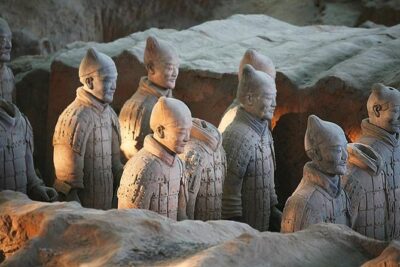
Mini Group Xian Day Tour to Terracotta Army, City Wall, Pagoda and Muslim Bazaar
Read our review →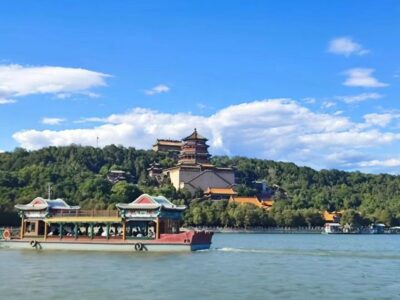
The Temple of Heaven or Summer Palace Entry Ticket
Read our review →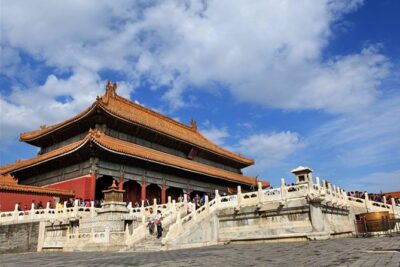
Beijing Classic Full-Day Tour including the Forbidden City, Tiananmen Square, Summer Palace and Temple of Heaven
Read our review →
Temple Heaven, Lama Temple, Summer Palace & Peking Duck Bus Tour
Read our review →
Best of Shanghai Day Tour, including Jade Buddha Temple & Bund & Yuyuan Garden
Read our review →
Temple Heaven, Summer Palace, Lama Temple, Hutong Bus Tour
Read our review →
Browse the lists this tour appears in